

Lesso America
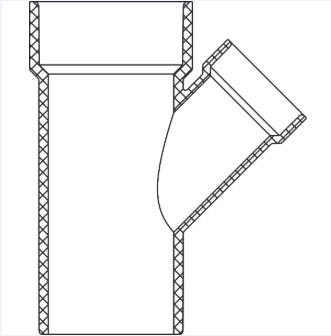
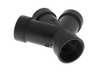
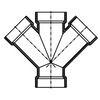
ABS DWV 45 Double Wye (ALL HUB)

- SKU:
- LN611
- Availability:
- Usually Ships Same Day
- Weight:
- 0.00 LBS



Description
ABS DWV 45 Double Wye (ALL HUB)
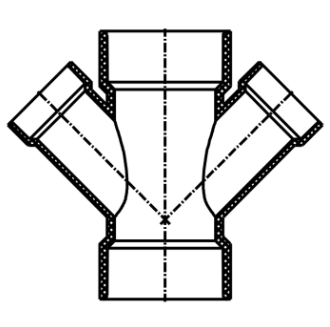
ABS DWV 45 Double Wyes provide two opposing 45-degree branch connections into a common main drain, waste, and vent piping run.
Featuring hub connections on all openings, this double wye configuration allows two branch lines to enter the main run from opposite sides at gradual 45-degree angles. The angled branch geometry supports smoother drainage transitions than abrupt perpendicular connections and can simplify multi-branch ABS DWV layouts by combining both branch connections into one fitting. The supplied product information for this ABS DWV family references ASTM D2661, CSA B181.1, NSF Standard 14, and a maximum operating temperature of 140°F.
Product Highlights
- ABS DWV 45 double wye fitting
- All-hub connection configuration
- Provides two opposing 45-degree branch connections
- Connects both branches into a common main piping run
- Gradual branch geometry supports smooth drainage flow
- Useful for multi-branch DWV piping layouts
- Can reduce the need for multiple separate wye fittings
- Hub connections accept compatible ABS DWV pipe
- Designed for solvent-cement installation
- Suitable for drain, waste, and vent systems
- Suitable for sewer and general drainage applications
- Non-pressure fitting
- Maximum operating temperature of 140°F
- Not intended for compressed air or gas service
- Not intended for pressure testing
- Manufactured from ABS material meeting applicable DWV requirements
- Referenced to ASTM D3965
- Complies with ASTM D2661
- Certified to CSA B181.1
- Meets NSF Standard 14 requirements
Technical Specifications
| Product Type | ABS DWV 45 Double Wye |
|---|---|
| Material | ABS |
| Connection Type | All Hub |
| Configuration | Double Wye |
| Branch Arrangement | Two Opposing 45-Degree Branches |
| Joint Method | Solvent Cement |
| System Type | Drain, Waste, and Vent (DWV) |
| Pressure Service | Non-Pressure |
| Maximum Operating Temperature | 140°F |
| Primary Function | Provide Two Opposing 45-Degree Branch Connections to a Common ABS DWV Main Run |
| Referenced Standards | ASTM D3965, ASTM D2661, CSA B181.1, NSF Standard 14 |
| Typical Applications | Sanitary Drainage, Waste Lines, Sewer Piping, General Drainage, and Multi-Branch DWV Connections |
Connection Configuration
Main Run Connections
The main hub connections form the primary ABS DWV piping path and accept compatible pipe for solvent-cement installation.
Opposing 45-Degree Branches
Two branch hubs enter the main run from opposite sides at gradual 45-degree angles, providing multiple branch connection points within one fitting.
45 Double Wye Design
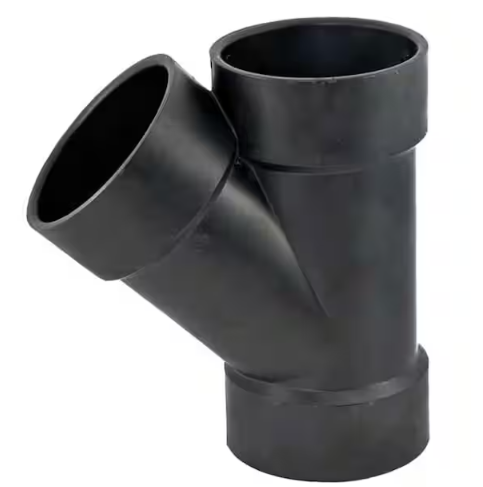
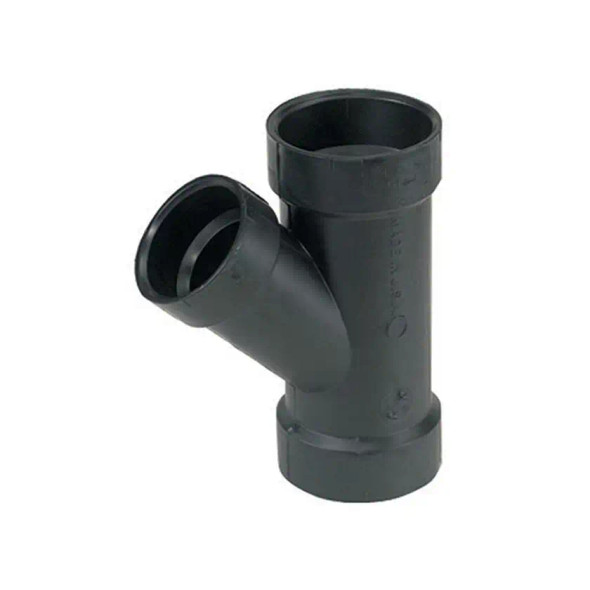
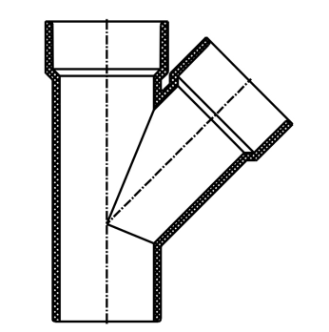
The 45 double wye combines two opposing wye-style branch connections into a single molded ABS fitting.
Each branch enters the main run at approximately 45 degrees, helping create gradual directional transitions and supporting efficient drainage flow through the junction.
This configuration can simplify installations where two branch drains need to connect to the same main DWV run while minimizing the number of separate fittings required.
Why Choose an ABS DWV 45 Double Wye?
Dual Branch Connection
- Provides two opposing branch connections
- Each branch enters at approximately 45 degrees
- Supports gradual flow transitions
- Useful for multi-branch drainage layouts
- Can reduce the need for two separate wye fittings
ABS DWV Benefits
- Lightweight construction
- Easy handling and installation
- Suitable for non-pressure drainage systems
- Compatible with ABS DWV piping systems
- Designed for sanitary and general drainage applications
Typical Applications
Drainage Systems
- Sanitary drain lines
- Waste piping
- Sewer piping
- General building drainage
- ABS DWV main runs
Multi-Branch Layouts
- Opposing branch drains
- Multiple fixture branches
- Horizontal drainage systems
- Residential plumbing
- Commercial drainage systems
Standards & Compliance
- ASTM D3965: Covers ABS materials suitable for pipe extrusion and molded fittings
- ASTM D2661: Covers Schedule 40 ABS drain, waste, and vent pipe and fittings
- CSA B181.1: Covers ABS drain, waste, and vent pipe, fittings, and accessories
- NSF Standard 14: Referenced by the supplied product information for this ABS DWV fitting family
Installation
Verify every nominal hub size before installation and confirm the intended main-run and opposing branch arrangement.
Cut all mating ABS pipe ends square and remove burrs. Clean and prepare the pipe and hub surfaces according to accepted ABS solvent-cement installation procedures.
Dry-fit the complete assembly before applying solvent cement to confirm main-run alignment and the orientation of both 45-degree branch connections.
Apply compatible ABS solvent cement as required and fully seat each pipe into its corresponding hub while maintaining proper flow and branch alignment.
Allow completed joints to cure according to the solvent cement manufacturer's recommendations before placing the drainage system into service.

Our piping specialists can help review your main-run size, both branch sizes, fitting orientation, and ABS DWV compatibility before you order.
Email the GetPipe.com Team Visit Quick SupportFrequently Asked Questions
What is an ABS DWV 45 double wye used for?
It is used to connect two opposing branch lines into a common ABS DWV main run using gradual 45-degree branch transitions.
What does ALL HUB mean?
It means each pipe connection on the fitting is a hub-style connection designed to accept compatible ABS DWV pipe.
How many branch connections does a double wye have?
It provides two opposing branch connections in addition to the main-run connections.
What angle do the branches enter the main run?
The branches enter the main run at approximately 45 degrees.
How is a double wye different from a double sanitary tee?
A double wye uses more gradual angled branch entries, while a double sanitary tee uses sanitary-pattern side branches. Selection should follow the intended piping layout and applicable plumbing requirements.
Can this fitting simplify a multi-branch layout?
Yes. Combining two opposing wye branches into one fitting can reduce the number of individual fittings and joints required in certain installations.
Does this fitting require solvent cement?
Yes. The hub connections are intended for compatible ABS solvent-cement installation.
Is this fitting intended for pressure systems?
No. The supplied ABS DWV information identifies this product family for non-pressure applications.
Can it be used for compressed air or gas?
No. The supplied product information states that ABS DWV fittings are not intended for transporting compressed air or gas.
Can this fitting be used for pressure testing?
No. The supplied product information states that ABS DWV fittings should not be used for pressure testing.
What is the maximum operating temperature?
The supplied product information specifies applications where operating temperatures do not exceed 140°F.
What should I verify before ordering?
Confirm every hub size, both branch sizes, main-run direction, branch orientation, mating ABS DWV pipe sizes, and the intended non-pressure application.
Important Ordering & Installation Notes
- This listing is for an ABS DWV 45 Double Wye with all-hub connections.
- Verify every nominal connection size before ordering.
- The fitting provides two opposing branch connections.
- Each branch enters the main run at approximately 45 degrees.
- Confirm main-run and branch orientation before installation.
- All pipe connections are hub-style connections.
- All hubs accept compatible ABS DWV pipe.
- Dry-fit the complete assembly before applying solvent cement.
- Confirm alignment of both branch connections before final assembly.
- This fitting is intended for non-pressure DWV, sewer, and general drainage applications.
- Do not use for transporting compressed air or gas.
- Do not use for pressure testing.
- Maximum operating temperature is 140°F.
- Use compatible ABS solvent cement for installation.
- Cut pipe square and remove burrs before assembly.
- Clean and prepare all mating surfaces before solvent-cement installation.
- Fully seat each ABS pipe into its corresponding hub.
- Maintain proper branch and flow alignment while the solvent-cement joints set.
- Allow completed joints to cure according to the solvent cement manufacturer's recommendations before service.
- Protect the fitting from incompatible chemicals, fire-stopping materials, thread sealants, and other aggressive agents that may damage ABS compounds.
- Consult manufacturer documentation for complete dimensions and available size configurations.
- Follow applicable plumbing codes and manufacturer installation recommendations.