

Spears
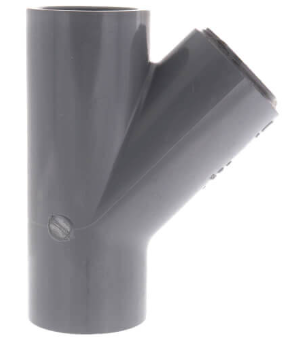
Schedule 80 CPVC Combination WYE & 45° Elbow, Socket (150 PSI)

- Availability:
- Usually Ships Same Day
- Weight:
- 0.00 LBS




Description
Schedule 80 CPVC Combination WYE & 45° Elbow, Socket (150 PSI)
Schedule 80 CPVC Combination WYE & 45° Elbow, Socket (150 PSI) combines a wye branch and 45-degree directional transition within one fitting. The socket configuration allows compatible CPVC pipe to connect at each opening using solvent-cement joining procedures.
The Schedule 80 CPVC combination wye and 45° elbow is designed for piping layouts that require branching with an angled flow transition. Selection should account for nominal size, socket compatibility, fitting orientation, 150 PSI rating, system conditions, and proper CPVC joining procedures.
Product Highlights
- CPVC construction
- Schedule 80 design
- 150 PSI rating
- Socket connection design
- Combination WYE and 45° elbow
- Provides branching and directional transition
- Designed for compatible CPVC pipe
- Designed for solvent-cement CPVC joining
Technical Specifications
| Product Type | Combination WYE & 45° Elbow |
|---|---|
| Material | CPVC |
| Schedule | Schedule 80 |
| Configuration | Combination WYE & 45° Elbow |
| Connection | Socket (SOC) |
| Socket Interface | Compatible CPVC Pipe |
| Pressure Rating | 150 PSI |
| Branch Style | WYE with 45° Directional Transition |
| Joining Method | CPVC Solvent-Cement Connections |
| Primary Function | Provide Branching and a 45° Directional Transition in Compatible CPVC Piping |
Combination Fitting Design
The combination fitting design integrates a wye-style branch with a 45° directional transition in one molded Schedule 80 CPVC fitting. This can simplify piping layouts that would otherwise require multiple separate fittings.
The branch direction and fitting orientation should be confirmed before installation. All adjoining socket sizes should also be checked before solvent-cement assembly begins.
Socket Connections
The socket connections accept appropriately sized compatible CPVC pipe at the fitting openings. These interfaces use solvent-cement joining to integrate the combination fitting into the piping system.
Pipe ends and fitting sockets should be clean and properly prepared before assembly. Compatible CPVC primer, solvent cement, insertion procedures, and required cure times should be followed.
WYE & 45° Transition
The WYE and 45° configuration combines branching with an angled directional path through one fitting. This provides a gradual branch transition compared with a perpendicular tee-style arrangement.
Proper orientation should be established before joining because adjustment becomes limited after solvent-cement assembly. Connected piping should remain properly aligned and supported.
Schedule 80 CPVC Application
A Schedule 80 CPVC Combination WYE & 45° Elbow provides a molded branch and directional connection for compatible CPVC piping systems. The specified configuration is identified with a 150 PSI pressure rating.
System temperature, pressure, fluid compatibility, joining requirements, and applicable installation procedures should be reviewed for the intended application. Proper piping support should be maintained around all connected runs.
Installation & Selection Considerations
- Confirm the nominal size.
- Verify all socket connections.
- Confirm the 150 PSI rating.
- Check branch orientation before joining.
- Support all connected piping runs.

Our piping specialists can help review nominal size, socket compatibility, branch orientation, 150 PSI requirements, adjoining CPVC pipe, and installation considerations before you order.
Frequently Asked Questions
What is a Schedule 80 CPVC Combination WYE & 45° Elbow used for?
It combines a wye branch and 45-degree directional transition within compatible Schedule 80 CPVC piping.
What type of connections does this fitting use?
The fitting uses socket connections designed for compatible CPVC pipe and solvent-cement joining.
What is the pressure rating?
This configuration is identified as 150 PSI.
Why use a combination WYE and 45° elbow?
It combines branching and an angled directional transition within one fitting.
How are the socket connections installed?
The sockets are designed for compatible CPVC solvent-cement joining using appropriate preparation, joining materials, and cure procedures.
What should I confirm before ordering?
Confirm nominal size, socket configuration, 150 PSI rating, branch orientation, adjoining CPVC pipe sizes, and system requirements.
Important Ordering & Installation Notes
- Confirm the nominal size.
- Verify all socket connections.
- Confirm the 150 PSI rating.
- Check fitting orientation.
- Use compatible CPVC joining procedures.