






Description
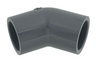
Schedule 80 CPVC 45° Elbow (SOC)
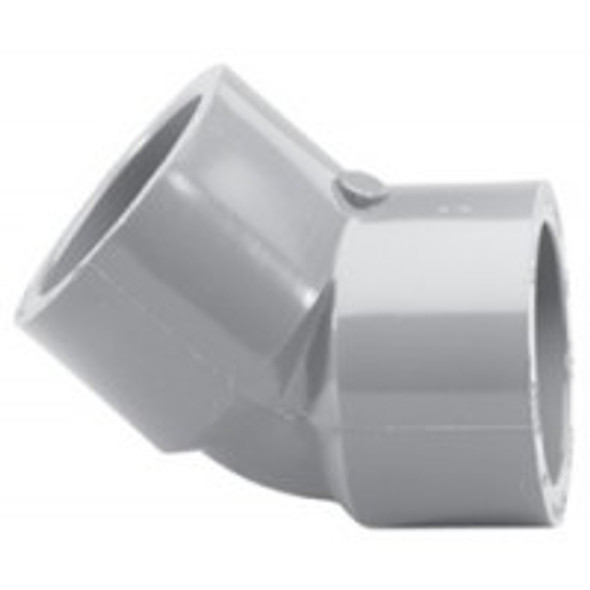
Schedule 80 CPVC 45° Elbow (SOC) provides a 45-degree direction change in compatible Schedule 80 CPVC piping. The fitting uses socket connections on both ends for solvent-cement joining to compatible CPVC pipe.
The Schedule 80 CPVC 45° elbow provides a directional transition where the piping layout requires a less abrupt turn than a 90° elbow. Selection should account for nominal size, socket compatibility, the required 45° angle, piping alignment, system conditions, and proper CPVC joining procedures.
Product Highlights
- CPVC construction
- Schedule 80 design
- 45° elbow configuration
- Two socket connections
- Provides a 45° direction change
- Designed for compatible CPVC pipe
- Supports angled piping transitions
- Designed for solvent-cement CPVC joining
Technical Specifications
| Product Type | 45° Elbow |
|---|---|
| Material | CPVC |
| Schedule | Schedule 80 |
| Configuration | 45° Elbow |
| Connection | Socket (SOC) x Socket (SOC) |
| Socket Interface | Compatible CPVC Pipe |
| Direction Change | 45° |
| Connection Count | Two Connections |
| Joining Method | CPVC Solvent-Cement Connections |
| Primary Function | Provide a 45° Direction Change in Compatible CPVC Piping |
45° Elbow Design
The 45° elbow design creates an angled transition in a Schedule 80 CPVC piping run. It provides a less abrupt direction change than a 90° elbow while maintaining a molded fitting connection.
The required 45° orientation should be established before joining the fitting. Both socket ends should correspond with the nominal size of the adjoining compatible CPVC pipe.
Socket Connections
The socket connections accept appropriately sized compatible CPVC pipe at both ends. Each socket provides a solvent-cement interface for integrating the elbow into the piping system.
Pipe and fitting surfaces should be clean and properly prepared before assembly. Compatible CPVC primer, solvent cement, insertion procedures, and required cure times should be followed.
45° Direction Change
The 45-degree configuration redirects the piping run while providing a more gradual transition than a right-angle elbow. It can be used for routing changes, offsets, and other compatible CPVC piping arrangements.
Orientation should be confirmed before the solvent-cement connections are completed. Proper support and alignment help reduce unnecessary mechanical stress around the fitting.
Schedule 80 CPVC Application
A Schedule 80 CPVC 45° Elbow provides a molded directional connection for compatible CPVC piping systems. Its socket ends are intended for properly prepared solvent-cement joints with compatible CPVC pipe.
System temperature, pressure, fluid compatibility, joining requirements, and applicable installation procedures should be reviewed for the intended application. Proper piping support should be maintained around the elbow.
Installation & Selection Considerations
- Confirm the nominal size.
- Verify both socket connections.
- Confirm the 45° angle.
- Check orientation before joining.
- Maintain proper piping alignment and support.

Our piping specialists can help review nominal size, socket compatibility, the required 45° direction change, CPVC joining requirements, and piping alignment before you order.
Frequently Asked Questions
What is a Schedule 80 CPVC 45° Elbow used for?
It provides a 45-degree direction change within compatible Schedule 80 CPVC piping.
What does SOC mean?
SOC identifies a socket connection designed to accept compatible CPVC pipe for solvent-cement joining.
How many socket connections does this elbow have?
The fitting has two socket connections, one at each end of the 45° elbow.
How are the socket connections joined?
The sockets are designed for compatible CPVC solvent-cement joining using appropriate preparation, joining materials, and cure procedures.
Why use a 45° elbow?
It provides an angled directional transition that is less abrupt than the change created by a 90° elbow.
What should I confirm before ordering?
Confirm nominal size, socket configuration, 45° angle, adjoining CPVC pipe compatibility, and system requirements.
Important Ordering & Installation Notes
- Confirm the nominal size.
- Verify both socket connections.
- Confirm the 45° angle.
- Check orientation before installation.
- Use compatible CPVC joining procedures.