

Spears
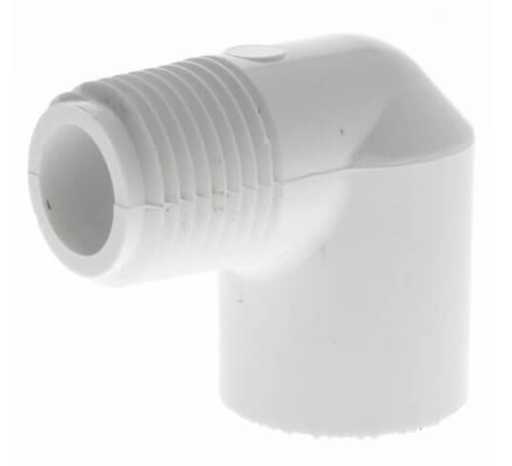
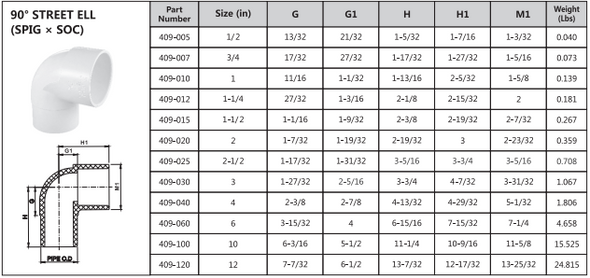
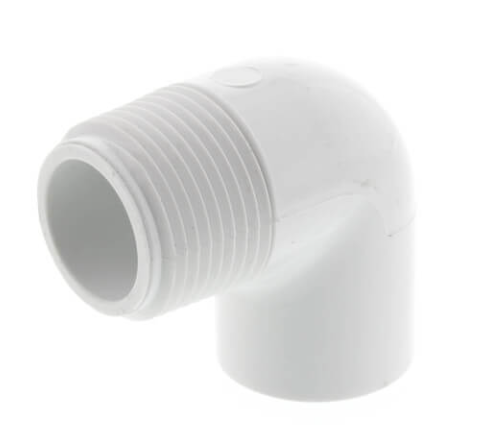
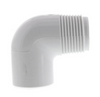
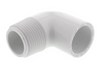
Schedule 40 PVC Reducing 90° Street Elbow (MPT x SOC)
- Availability:
- Usually Ships Same Day
- Weight:
- 0.00 LBS




Description
Schedule 40 PVC Reducing 90° Street Elbow (MPT x SOC)
Schedule 40 PVC Reducing 90° Street Elbow (MPT x SOC) provides a 90-degree change in direction while transitioning between different compatible connection sizes using a male pipe thread and a socket connection. The MPT end connects to a compatible female-threaded component, while the socket end receives appropriately sized compatible PVC pipe.
The reducing street elbow configuration combines a right-angle directional transition, size change, and mixed MPT x SOC connections in one fitting. Selection should account for both nominal sizes, Schedule 40 PVC compatibility, required reduction, male-thread and socket positions, adjoining components, joining requirements, piping alignment, and available installation clearance.
Product Highlights
- PVC construction
- Schedule 40 design
- Reducing configuration
- 90° street elbow design
- Male thread x socket connections
- Provides a right-angle size transition
- Connects compatible female threads and PVC pipe
- Combines a size reduction and 90° transition in one fitting
Technical Specifications
| Product Type | Reducing Street Elbow |
|---|---|
| Material | PVC |
| Schedule | Schedule 40 |
| Connection | Male Pipe Thread x Socket (MPT x SOC) |
| Connection Count | Two |
| Fitting Configuration | Reducing 90° Street Elbow |
| Male Thread Interface | Compatible Female Pipe Thread |
| Socket Interface | Compatible PVC Pipe |
| Joining Method | Threaded Connection x Compatible PVC Solvent-Cement Joining |
| Direction Change | 90° |
| Piping Configuration | Reducing Right-Angle Transition |
| Primary Function | Provide a Reducing 90° Transition Between Compatible Threaded and Socket Connections |
Reducing Street Elbow Design
The reducing street elbow configuration combines a size transition with a 90-degree directional change within a single fitting. Its male-threaded end connects directly to a compatible female-threaded component, while the socket end receives appropriately sized compatible PVC pipe.
Both nominal connection sizes should be confirmed before installation because the fitting is specifically configured to transition between different sizes. Planning the elbow orientation in advance also helps coordinate the required reduction, piping direction, adjoining components, and available working clearance.
MPT & Socket Connections
The male pipe thread engages a compatible female-threaded connection, while the socket opening receives compatible PVC pipe. These different connection styles require the appropriate assembly method for each side while allowing the fitting to provide the required size and directional transition.
The threaded connection should be started carefully and kept properly aligned, while the socket surfaces should be prepared for the applicable PVC solvent-cement joining procedure. Compatible joining materials and controlled assembly help reduce unnecessary mechanical stress on the fitting and adjoining piping.
Schedule 40 PVC Integration
The Schedule 40 PVC construction allows the reducing street elbow to integrate into compatible Schedule 40 PVC piping arrangements requiring a mixed-connection size transition. Matching both nominal sizes and connection types to the adjoining components helps maintain the intended piping configuration.
Application suitability should be evaluated using the requirements of the complete piping system rather than the schedule designation alone. Intended service conditions, mating materials, connection compatibility, joining materials, installation environment, piping support, and applicable practices should all be considered during fitting selection.
Reducing 90° Transition
A Schedule 40 PVC Reducing 90° Street Elbow provides a compact way to change piping size and direction at the same connection point. The MPT x SOC arrangement can simplify layouts where a compatible female-threaded component must transition through a right angle to a different size of PVC pipe.
Installation planning should consider both connection sizes, thread engagement, socket insertion, elbow orientation, nearby fittings, available clearance, and piping support. Adjoining components should align naturally with the elbow so the fitting is not relied upon to correct offsets or support improperly positioned piping.
Installation & Selection Considerations
- Confirm both nominal sizes.
- Verify the required 90° transition.
- Check Schedule 40 PVC compatibility.
- Match the MPT and socket connections correctly.
- Confirm the reducing elbow orientation before assembly.

Our PVC fitting specialists can help review both nominal sizes, Schedule 40 requirements, MPT x SOC configuration, required reduction, 90° direction change, mating threaded component, adjoining PVC pipe, joining requirements, fitting orientation, and available installation clearance before you order.
Frequently Asked Questions
What is a Schedule 40 PVC Reducing 90° Street Elbow used for?
It provides a 90-degree directional change and size transition between a compatible female-threaded connection and compatible PVC pipe.
What does MPT mean?
MPT means Male Pipe Thread and identifies the externally threaded connection designed to engage a compatible female pipe thread.
What does SOC mean?
SOC identifies a socket-style connection designed to receive appropriately sized compatible PVC pipe.
Why is this fitting called a reducing street elbow?
It combines different connection sizes with a street-style male-threaded end and a 90-degree directional transition in one fitting.
Do both connections use the same joining method?
No. The MPT side uses a threaded mechanical connection, while the socket side uses the applicable compatible PVC solvent-cement joining procedure.
What should I confirm before ordering?
Confirm both nominal sizes, the required reduction, MPT x SOC connection arrangement, Schedule 40 PVC compatibility, and the required 90-degree orientation.
Important Ordering & Installation Notes
- Inspect both connections before use.
- Confirm both nominal connection sizes.
- Start the threaded connection carefully by hand.
- Prepare the socket connection before cementing.
- Use compatible joining materials for each connection.