




Description
AWWA Swing Check Valve Flanged
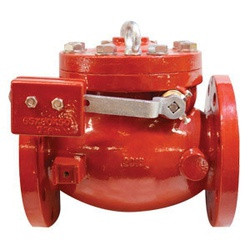
ASC Series 22FC AWWA Swing Check Valve is a flanged ductile iron check valve designed to automatically permit forward flow while helping prevent reverse flow in waterworks and compatible piping systems.
The valve features a ductile iron body, EPDM resilient disc seat ring, brass body seat, Class 125 flanged connections, and fusion-bonded epoxy coating. Series 22FC is rated for 300 PSI cold working pressure and conforms to AWWA C508.
Product Highlights
- ASC Series 22FC
- 300 PSI CWP
- AWWA C508 compliant
- Class 125 flanged ends
- EPDM resilient disc
- Fusion-bonded epoxy coating
Technical Specifications
| Product Type | AWWA Swing Check Valve |
|---|---|
| Brand | ASC / SCI |
| Series | 22FC |
| Body Material | Ductile Iron ASTM A536 Grade 65-45-12 |
| End Connections | Flanged |
| Flange Standard | ASME / ANSI Class 125 |
| Pressure Rating | 300 PSI CWP |
| Disc | Ductile Iron ASTM A536 Grade 65-45-12 |
| Disc Seat Ring | EPDM Rubber |
| Body Seat | Brass ASTM B62 C83600 |
| Coating | Fusion-Bonded Epoxy, AWWA C550 |
| Standards | AWWA C508 / MSS-SP-71 |
| Compliance | NSF/ANSI 372-2011 |
Construction Details
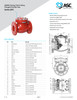
Series 22FC uses a ductile iron ASTM A536 Grade 65-45-12 body, bonnet, disc, retainer washer, and clapper arm for durable waterworks service.
The sealing assembly includes a brass ASTM B62 C83600 body seat and EPDM resilient disc seat ring. EPDM O-rings and a PTFE bonnet gasket are also used within the valve assembly.
Internal hardware includes 304, 316, and 410 stainless steel components along with bronze components. The exterior incorporates a fusion-bonded epoxy coating conforming to AWWA C550.
Check Valve Design & Typical Applications
Swing Check Design
- Automatic flow operation
- Resilient EPDM disc seal
- Brass body seat
- Four-boss body design
- Flanged installation
Typical Applications
- Municipal water distribution
- Water treatment systems
- Pump discharge piping
- Utility water systems
- Industrial water piping
Installation & Selection Considerations
- Confirm the required valve size.
- Verify Class 125 flange compatibility.
- Confirm flow direction before installation.
- Select compatible flange gaskets.
- Confirm 300 PSI service suitability.

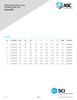
Use the supplied ASC datasheet to review Series 22FC materials, 300 PSI rating, Class 125 flange requirements, resilient disc construction, and other technical information when selecting the correct swing check valve.
Need Help Selecting an AWWA Swing Check Valve Flanged?
Need help confirming valve size, flange compatibility, pressure requirements, flow direction, or suitability for your waterworks application? The GetPipe.com Team can help.
Frequently Asked Questions
What is the ASC series for this swing check valve?
This flanged ductile iron AWWA swing check valve is ASC Series 22FC.
What is the pressure rating?
Series 22FC is rated for 300 PSI cold working pressure.
What material is the valve body?
The valve body is ductile iron ASTM A536 Grade 65-45-12.
What type of flange does Series 22FC use?
Series 22FC uses ASME / ANSI Class 125 flanged end connections.
What sealing materials are used?
The valve uses an EPDM resilient disc seat ring with a brass ASTM B62 C83600 body seat.
Does the Series 22FC meet AWWA C508?
Yes. ASC specifies Series 22FC as conforming to AWWA C508 and meeting MSS-SP-71.
What does a swing check valve do?
It allows flow in the intended direction and automatically closes when flow reverses to help prevent backflow.
What should I confirm before ordering?
Confirm valve size, Class 125 flange compatibility, system pressure, flow direction, sealing requirements, and intended service.
Important Ordering & Installation Notes
- Confirm the required valve size.
- Verify mating flange compatibility.
- Install in the correct flow direction.
- Select compatible flange gaskets.
- Follow applicable AWWA practices.