

ASC
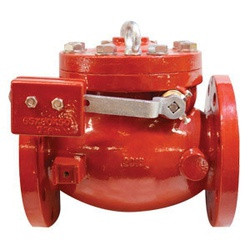
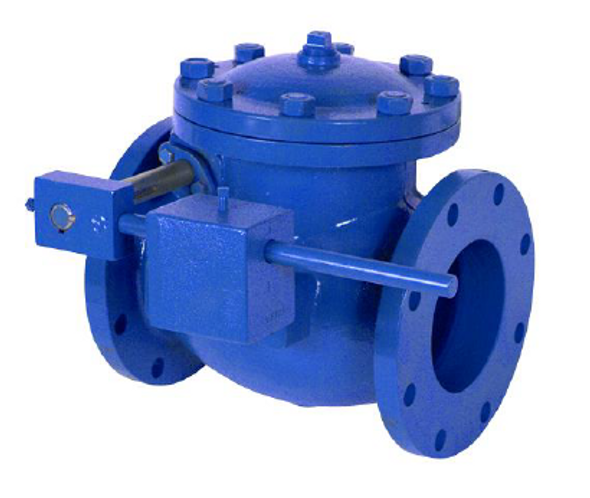
AWWA Swing Check Valve Flanged with Lever and Weight

- SKU:
- 22FCW
- Availability:
- Usually Ships Same Day
- Weight:
- 0.00 LBS




Description
AWWA Swing Check Valve Flanged with Lever and Weight
Figure 22FCW AWWA Swing Check Valve with Lever and Weight is a flanged ductile iron check valve designed for water-service applications requiring dependable prevention of reverse flow with an external lever-and-weight assembly. The valve features a resilient disc, brass seat, fusion-bonded epoxy coating, and rugged ductile iron construction for municipal, commercial, and industrial water systems.
Rated for 300 PSI cold working pressure (CWP), the Figure 22FCW conforms to AWWA C508 and incorporates an external lever and weight that assists disc closure and provides visible indication of disc movement. Optional spring kits are available for specialized applications.
Product Highlights
- AWWA swing check valve with external lever and weight
- Figure 22FCW
- 300 PSI cold working pressure (CWP)
- Conforms to AWWA C508
- Ductile iron ASTM A536 Grade 65-45-12 body
- External lever-and-weight assembly
- Resilient disc
- Brass seat
- Fusion-bonded epoxy coating
- Epoxy coating conforms to ANSI/AWWA C550
- Meets MSS SP-71 requirements
- NSF/ANSI 372-2011 compliant
- Optional spring kits available for specialized applications
Technical Specifications
| Valve Type | Swing Check Valve with Lever & Weight |
|---|---|
| Figure | 22FCW |
| Body Material | Ductile Iron |
| Body Material Standard | ASTM A536 Grade 65-45-12 |
| Pressure Rating | 300 PSI CWP |
| End Connection | Flanged |
| Operating Feature | External Lever & Weight Assembly |
| Disc | Resilient Disc |
| Seat | Brass |
| Coating | Fusion-Bonded Epoxy |
| AWWA Valve Standard | AWWA C508 |
| Coating Standard | ANSI/AWWA C550 |
| Additional Standard | MSS SP-71 |
| Compliance | NSF/ANSI 372-2011 |
| Optional Accessories | Spring Kits Available |
How Does a Swing Check Valve with Lever & Weight Work?
Forward flow moves the hinged disc away from the seat, allowing water to pass through the valve. As flow slows or begins to reverse, the disc swings back toward the seat to help prevent reverse flow.
The external lever-and-weight assembly assists the disc-closing action and provides an external indication of disc movement. Proper lever and weight adjustment, installation orientation, and system operating conditions should be confirmed using the manufacturer's technical information.
Lever & Weight vs. Standard Swing Check Valve
Lever & Weight – Figure 22FCW
- External lever-and-weight assembly
- Assists disc-closing action
- Provides visible indication of disc position and movement
- Useful where additional control of closing characteristics is desired
- Optional spring kits available for specialized applications
Standard Swing Check – Figure 22FC
- Traditional internal swing-disc operation
- No external lever-and-weight assembly
- Automatic response to forward and reverse flow
- Simpler external valve configuration
- Common for general water-distribution service
Resilient Disc & Brass Seat
Resilient Disc
The resilient disc forms the primary closing element and is designed to return toward the seat as forward flow decreases or reverse flow begins.
Brass Seat
The brass seat provides the mating sealing surface for the resilient disc and supports dependable check-valve closure.
Construction Details
- Body: ASTM A536 Grade 65-45-12 ductile iron
- Operating Feature: External lever-and-weight assembly
- Disc: Resilient disc
- Seat: Brass
- Ends: Flanged
- Coating: Fusion-bonded epoxy
- Coating Standard: ANSI/AWWA C550
- Valve Standard: AWWA C508
- Additional Standard: MSS SP-71
- Compliance: NSF/ANSI 372-2011
- Optional Accessories: Spring kits available
Fusion-Bonded Epoxy Coating
The Figure 22FCW features a fusion-bonded epoxy coating conforming to ANSI/AWWA C550. The coating protects internal and external ductile iron surfaces and provides corrosion resistance for compatible water-service applications.
Optional Spring Kits
Spring kits are available for specialized applications where additional assistance or control of the disc-closing action may be required.
Spring selection and use should follow the manufacturer's recommendations. Confirm application, installation orientation, flow conditions, and system requirements before specifying an optional spring kit.
Flanged Connection
The Figure 22FCW uses flanged connections for integration into compatible AWWA and mechanical piping systems. Flanged connections provide a bolted, serviceable joint and are commonly used on larger water-distribution piping.
Verify mating flange dimensions, gasket selection, bolting requirements, pressure rating, alignment, and project specifications before installation.
Common Applications
Water & Utility Systems
- Municipal water-distribution systems
- Water-service piping
- Pump discharge piping
- Utility piping systems
- Water-treatment facilities
Commercial & Industrial Systems
- Commercial water systems
- Industrial water piping
- Mechanical-room installations
- Building-service water systems
- Compatible flanged piping systems
Installation & Selection Considerations
- Confirm the exact valve size and Figure 22FCW lever-and-weight configuration required before ordering.
- Verify that the 300 PSI CWP rating and flanged connections are suitable for the intended piping system.
- Confirm required valve orientation, flow direction, mating flange compatibility, gasket selection, and bolting before installation.
- Confirm the lever-and-weight assembly is installed and adjusted according to manufacturer instructions; use optional spring kits only where appropriate.
- Review the supplied ASC technical sheet for dimensions, materials, lever-and-weight configuration, installation requirements, and applicable standards before final selection.

Use the supplied ASC technical sheet to verify Figure 22FCW specifications, materials, 300 PSI CWP rating, lever-and-weight configuration, dimensions, optional spring kits, applicable standards, and installation information before ordering.
ASC Figure 22FCW AWWA Swing Check Valve PDFNeed Help Selecting an AWWA Swing Check Valve?
Need help confirming the correct valve size, Figure 22FCW lever-and-weight configuration, pressure rating, flange requirements, optional spring kit, materials, applicable standards, or system compatibility? The GetPipe.com Team can help you verify the right AWWA swing check valve before ordering.
Frequently Asked Questions
What type of valve is the Figure 22FCW?
The Figure 22FCW is a flanged ductile iron AWWA swing check valve equipped with an external lever-and-weight assembly.
What is the pressure rating?
The Figure 22FCW is rated for 300 PSI cold working pressure (CWP).
What AWWA standard does this valve conform to?
The Figure 22FCW conforms to AWWA C508.
What material is the valve body?
The valve body is manufactured from ASTM A536 Grade 65-45-12 ductile iron.
What does the lever and weight do?
The external lever-and-weight assembly assists the disc-closing action and provides external indication of disc movement. Installation and adjustment should follow the manufacturer's technical recommendations.
How is the Figure 22FCW different from the Figure 22FC?
The Figure 22FCW includes an external lever-and-weight assembly. The Figure 22FC uses traditional internal swing-disc operation without the external lever-and-weight assembly.
What type of disc does the valve use?
The Figure 22FCW uses a resilient disc.
What material is the valve seat?
The valve uses a brass seat.
What type of coating does the valve have?
The valve has a fusion-bonded epoxy coating conforming to ANSI/AWWA C550.
Does this valve meet MSS SP-71?
Yes. The supplied product information identifies the Figure 22FCW as meeting MSS SP-71 requirements.
Does this valve comply with NSF/ANSI 372?
Yes. The supplied product information identifies the Figure 22FCW as compliant with NSF/ANSI 372-2011.
Are spring kits available?
Yes. Optional spring kits are available for specialized applications. Confirm the appropriate spring configuration using the supplied manufacturer technical information before selection.
Does the valve require an actuator?
No external powered actuator is normally required for basic check-valve operation. The valve responds automatically to system flow, with the lever-and-weight assembly assisting the closing action.
Where can I verify dimensions and lever-and-weight information?
Use the supplied ASC Figure 22FCW technical sheet linked in Willy's help box directly above this FAQ section.
Important Ordering & Installation Notes
- Confirm that Figure 22FCW AWWA Swing Check Valve with flanged ends, lever, and weight is the required configuration.
- Confirm the exact valve size required before ordering.
- Verify the documented 300 PSI CWP rating for the intended system.
- Confirm mating flange, gasket, bolting, valve orientation, flow direction, and lever-and-weight setup before installation.
- Review the supplied ASC technical sheet when selecting optional spring kits and for applicable dimensions, standards, and additional manufacturer product information.