

Service Metal
304 Stainless Steel Butt Weld Eccentric Reducer - Sch 40
- Availability:
- Allow 1-2 Days to Ship
- Weight:
- 0.00 LBS



Description
304 Stainless Steel Butt Weld Eccentric Reducer - Sch 40
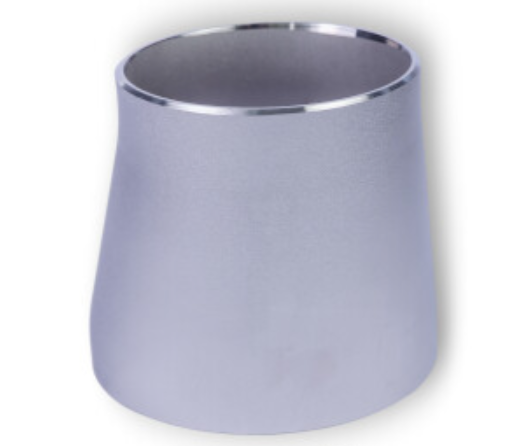
304/L stainless steel Schedule 40S butt weld eccentric reducers provide an offset transition between different pipe sizes while maintaining one side of the piping run in alignment. Manufactured from ASTM A/SA403 WP304/L stainless steel, these fittings offer dependable corrosion resistance, mechanical strength, and weldability.
Manufactured to ASME B16.9 dimensional standards, the eccentric profile supports controlled pipe-size transitions where a level top or bottom line is required. Available size combinations range from 2 inches x 1-1/2 inches through 8 inches x 6 inches.
Key Features
- Eccentric reducer with offset inlet and outlet centerlines
- Schedule 40S wall thickness
- ASTM A/SA403 WP304/L stainless steel construction
- Manufactured to ASME B16.9 dimensional standards
- Butt weld ends provide strong, permanent piping connections
- Offset profile maintains one side of the piping run in alignment
- Dual-grade 304/L material provides corrosion resistance and weldability
- Available in five reducing size combinations from 2" x 1-1/2" through 8" x 6"
Construction Details
Manufactured from dual-certified WP304/L stainless steel, combining the corrosion resistance of Type 304 with the lower carbon content and improved weldability of Type 304L.
The asymmetrical tapered body transitions between two pipe diameters while keeping one edge flat for proper piping alignment.
Each reducer is formed to ASME B16.9 dimensions for accurate fit-up with corresponding Schedule 40S stainless steel pipe.

Use our common pipe diameters and wall thickness chart to confirm sizing before ordering malleable iron fittings.
Important Notes
Confirm both nominal pipe sizes, wall thicknesses, and the required flat-side orientation before installation.
Butt weld fittings require proper end preparation and qualified welding procedures to maintain joint integrity and corrosion resistance.
Pressure and temperature ratings depend on the complete piping system design, applicable code, joining method, and operating conditions.