

Merit Brass
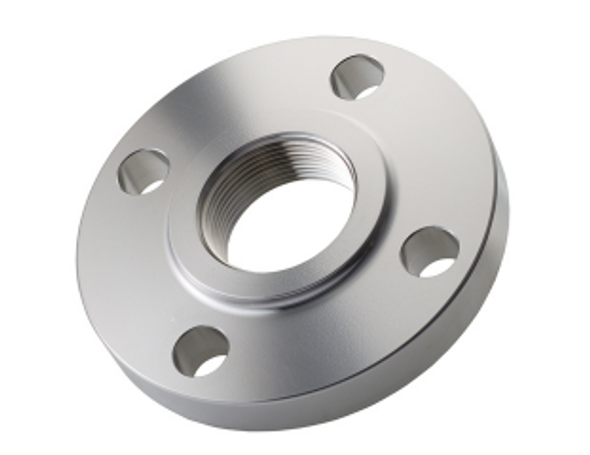
150# Stainless Steel Flat Face Blind Flange

- SKU:
- 435B-635B
- Availability:
- Usually Ships Same Day
- Weight:
- 0.00 LBS



Description

150# Stainless Steel Flat Face Blind Flange
150# Stainless Steel Flat Face Blind Flanges are designed to close the end of a flanged piping system, valve, or equipment connection without providing a bore for flow. The blind configuration creates a removable bolted closure, making it useful for line termination, isolation, future expansion, inspection, and maintenance access.
These flanges are available in 304 and 316 stainless steel, use a 150# flange pattern, and feature an MSS flat-face configuration. Material conforms to ASTM A351, and the manufacturing facility is listed as ISO 9001:2008.
Product Highlights
- 150# stainless steel blind flange
- MSS flat-face configuration
- Designed to close the end of a flanged piping connection
- No center bore for flow
- Available in 304 and 316 stainless steel
- Material conforms to ASTM A351
- Removable bolted closure
- Useful for isolation, line termination, and future expansion
- Corrosion-resistant stainless steel construction
- Suitable for commercial and industrial piping systems
- Manufactured in an ISO 9001:2008 facility
Blind Flange Construction
A blind flange is a solid flange without a center opening. It bolts to a compatible mating flange and gasket to close the piping system at that location.
Because the closure is bolted rather than permanently welded shut, the blind flange can be removed later when access is needed for inspection, maintenance, cleaning, modification, or future system expansion.
These flanges are manufactured from stainless steel material conforming to ASTM A351 and are available in 304 and 316 stainless steel grades.
Technical Specifications
| Product Type | Blind Flange |
|---|---|
| Pressure Class | 150# |
| Face Style | Flat Face (FF) |
| Flange Pattern | 150# |
| Material | Stainless Steel |
| Available Grades | 304 & 316 Stainless Steel |
| Material Standard | ASTM A351 |
| Connection Type | Bolted Flange |
| Bore | None |
| Manufacturing Facility | ISO 9001:2008 |
Why Choose a Stainless Steel Blind Flange?
Removable Line Closure
- Closes the end of a flanged piping system
- No center bore permits flow through the flange
- Bolted configuration allows later removal
- Useful for inspection and maintenance access
- Suitable for future piping system expansion points
Corrosion-Resistant Construction
- Available in 304 and 316 stainless steel
- Suitable for corrosive service environments
- Resists rust and scale formation
- Useful in commercial and industrial piping systems
- Provides long service-life potential in compatible applications
Flat Face Blind Flange Design
The flat-face sealing surface extends across the flange face rather than using a raised sealing area. This configuration is intended for use with compatible flat-face mating flanges and suitable gasket materials.
Proper gasket selection, bolt pattern compatibility, bolt torque, and mating flange condition are important for achieving a dependable flange joint.
Blind Flange vs. Threaded Flange
Blind Flange
- Solid flange with no center bore
- Designed to stop flow and close a connection
- Bolts to a compatible mating flange
- Useful for line termination and isolation
- Can be removed for future access
Threaded Flange
- Includes a threaded bore
- Connects to compatible male-threaded pipe
- Allows flow through the flange
- Used as a piping connection rather than a closure
- Different function from a blind flange
304 vs. 316 Stainless Steel
304 Stainless Steel
304 stainless steel is commonly selected for general-purpose commercial and industrial piping systems requiring corrosion-resistant stainless steel construction.
316 Stainless Steel
316 stainless steel is commonly selected where increased corrosion resistance is required, including more demanding chemical, process, marine, or chloride-exposed service conditions.
Common Applications
Commercial & General Piping
- End-of-line closures
- Water piping systems
- Mechanical piping installations
- Valve and equipment isolation points
- Future expansion connections
Industrial & Process Applications
- Industrial process piping
- Chemical processing systems
- Water treatment applications
- Corrosion-resistant piping systems
- Maintenance and inspection access points
Installation & Selection Guidance
- Confirm the required nominal flange size before ordering.
- Select the appropriate 304 or 316 stainless steel grade for the operating environment.
- Confirm that the 150# bolt pattern matches the mating flange or equipment connection.
- Use a compatible flat-face mating flange and gasket.
- Confirm bolt size, bolt pattern, and gasket requirements before assembly.
- Inspect both flange faces for damage or contamination before installation.
- Use an appropriate flange bolt tightening sequence to achieve even gasket compression.
- Verify pressure, temperature, and media compatibility for the complete piping system.
- Provide adequate access if the blind flange may need to be removed later.
- Installation should be completed in accordance with applicable piping codes and project requirements.
Important Ordering Notes
- Product is a 150# stainless steel flat-face blind flange.
- MSS flat-face configuration.
- Available in 304 and 316 stainless steel.
- Material conforms to ASTM A351.
- Manufacturing facility is listed as ISO 9001:2008.
- Blind configuration has no center bore.
- Confirm nominal flange size before ordering.
- Confirm the 150# bolt pattern matches the mating flange or equipment connection.
- Use a compatible flat-face gasket and mating flange.
- Verify system pressure, temperature, and media compatibility before installation.
- Refer to the Stainless Steel ANSI Flange Dimensions document for applicable dimensional information.
Product Documents
Frequently Asked Questions
What is a blind flange used for?
A blind flange is used to close the end of a flanged piping system, valve, or equipment connection and stop flow through that connection.
What pressure class is this flange?
This flange uses a 150# flange pattern.
What does FF mean?
FF means flat face. The sealing surface extends across the flange face rather than using a raised sealing area.
Does a blind flange have a center opening?
No. A blind flange is solid and does not contain a center bore for flow.
What stainless steel grades are available?
These flanges are available in 304 and 316 stainless steel.
What material specification applies?
The supplied product information states that the material conforms to ASTM A351.
Can the blind flange be removed later?
Yes. Because it is installed as a bolted flange connection, it can be removed for maintenance, inspection, cleaning, or future system expansion.
What gasket should be used?
Gasket selection depends on the mating flange, system media, pressure, temperature, and applicable piping requirements. Confirm that the gasket is suitable for a flat-face flange connection.
What is the difference between 304 and 316 stainless steel?
Both are corrosion-resistant stainless steel grades. 316 is commonly selected for more demanding chemical, marine, chloride-exposed, and corrosive service environments.
Where can I find flange dimensions?
Use the Stainless Steel ANSI Flange Dimensions document in the Product Documents section above.

Ask Willy: Product Selection & Support
Our GetPipe.com team can help review sizing, material, connection requirements, and product information before you order.