

Merit Brass

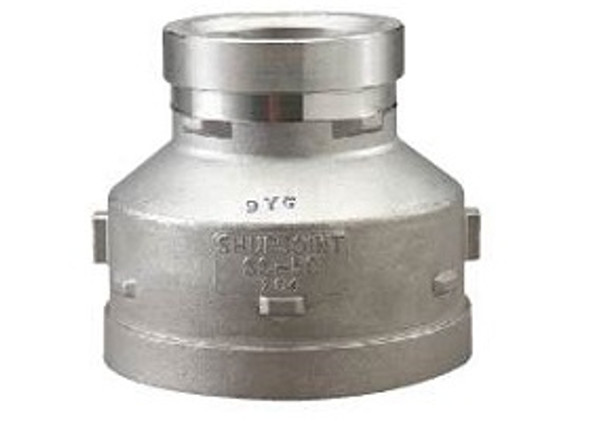
Stainless Steel Weld Concentric Reducer

(No reviews yet) Write a Review
SKU:
SWSR
Availability:
Usually Ships Same Day
Weight:
0.00 LBS
*Images are for visual reference only.
  • Stainless Steel Butt Weld Concentric Reducer
  • Merit Brass
  • Stainless Steel Butt Weld Concentric Reducer Dimensions
$0.00

Represents the combined quantity sold of all the sizes under this product SKU.
Sold:
Frequently bought together:

Description

Stainless Steel Weld Concentric Reducer

Stainless Steel Weld Concentric Reducers are designed to create a smooth transition between different pipe diameters while maintaining a common centerline through the piping system. These butt weld fittings help reduce abrupt flow changes and are widely used in food processing, pharmaceutical, chemical, petrochemical, water treatment, and industrial process applications.

Available in Schedule 10 and Schedule 40, these reducers are manufactured from stainless steel raw material conforming to ASTM A312 and are produced and tested to recognized ASTM, ASME, ANSI, and MSS standards for dimensional consistency and dependable service.

Product Highlights

  • Concentric butt weld reducer design
  • Provides a centered transition between different pipe sizes
  • Maintains a common centerline through the reduction
  • Available in Schedule 10 and Schedule 40
  • Manufactured and tested to ASTM A403 and ASME SA403/SA403M
  • Raw material conforms to ASTM A312
  • Wall thicknesses conform to ANSI B16.9, ANSI B16.28, and MSS SP-43
  • Smooth transition helps support efficient flow characteristics
  • Suitable for permanent welded stainless steel piping systems
  • Well suited for sanitary, industrial, and process applications

Technical Specifications

Product Type Concentric Butt Weld Reducer
Material Stainless Steel
Available Schedules Schedule 10 & Schedule 40
Connection Type Butt Weld
Reduction Style Concentric
Centerline Common Centerline Through Both Ends
Raw Material Standard ASTM A312
Manufacturing / Testing Standard ASTM A403 & ASME SA403/SA403M
Dimensional / Wall Thickness Standards ANSI B16.9, ANSI B16.28 & MSS SP-43
Primary Applications Food Processing, Pharmaceutical, Chemical, Petrochemical, Water Treatment & Industrial Process Piping

Concentric Reducer Design

A concentric reducer transitions from a larger pipe diameter to a smaller pipe diameter while keeping both pipe ends centered on the same axis.

This symmetrical design is commonly used where maintaining a straight piping centerline is important and where a gradual transition between pipe sizes is preferred.

Smooth Flow Transition

The tapered reducer body provides a gradual change in internal diameter rather than an abrupt reduction. This helps support smoother flow through the fitting and can reduce unnecessary turbulence through the transition.

Proper reducer sizing should be based on the required upstream and downstream pipe sizes, wall thicknesses, and system design.

Butt Weld Construction

These reducers use butt weld connections on both ends for permanent installation in compatible stainless steel piping systems. Precision-formed ends support accurate fit-up before welding.

Confirm both pipe sizes, schedules, material requirements, and welding procedures before fabrication or installation.

Schedule 10 vs. Schedule 40

Schedule 10

  • Lighter wall option for compatible piping systems
  • Useful where lower wall thickness is appropriate
  • Manufactured and tested to applicable ASTM and ASME requirements
  • Confirm both connecting pipe schedules before ordering

Schedule 40

  • Heavier wall than Schedule 10
  • Suitable where greater wall thickness is required
  • Manufactured and tested to applicable ASTM and ASME requirements
  • Confirm both connecting pipe schedules before welding

Concentric vs. Eccentric Reducers

Concentric Reducer

  • Maintains a common centerline
  • Symmetrical tapered profile
  • Useful for vertical and general process piping layouts
  • Provides a centered transition between pipe sizes

Eccentric Reducer

  • Offsets the centerline between pipe sizes
  • Uses one flatter side through the transition
  • Selected where piping-layout or flow requirements call for an offset transition
  • Different geometry than a concentric reducer

Standards & Construction

These stainless steel concentric reducers are manufactured from raw material conforming to ASTM A312. Manufacturing and testing are performed in accordance with ASTM A403 and ASME SA403/SA403M.

Applicable wall thicknesses and dimensions conform to ANSI B16.9, ANSI B16.28, and MSS SP-43 for compatibility with standard stainless steel butt weld piping systems.

Common Applications

Sanitary & Process Systems

  • Food processing
  • Pharmaceutical piping
  • Water treatment systems
  • General process piping
  • Sanitary stainless steel systems

Industrial & Chemical Service

  • Chemical processing
  • Petrochemical systems
  • Industrial piping
  • Mechanical equipment connections
  • Corrosion-resistant piping assemblies

Need Help With Butt Weld Fitting Selection?

Confirm the larger pipe size, smaller pipe size, Schedule 10 or Schedule 40 wall thickness, stainless steel material requirements, and welding procedure before ordering.

Use the product documents below to review butt weld fitting dimensions and certification information.

Product Documents

Stainless Steel Butt Weld Dimensions

Use this dimensional reference to verify stainless steel butt weld fitting dimensions before ordering, fabrication, or installation.

  • Reference dimensions for stainless steel butt weld fittings
  • Useful for confirming both reducer end sizes
  • Supports Schedule 10 and Schedule 40 fitting selection
  • Recommended for checking dimensional compatibility before welding

Stainless Steel Certification Letter

Use this certification document for supporting information regarding the stainless steel butt weld fitting product line and applicable manufacturing requirements.

  • Certification reference for stainless steel butt weld fittings
  • Useful for project documentation and submittal review
  • Supports verification of applicable product standards
  • Recommended where certification documentation is required

Frequently Asked Questions

What is a concentric reducer?

A concentric reducer is a fitting that transitions between two different pipe sizes while maintaining a common centerline through both connections.

How is a concentric reducer different from an eccentric reducer?

A concentric reducer keeps both ends centered on the same axis. An eccentric reducer offsets the centerline and uses an asymmetrical transition.

What schedules are available?

The supplied product information lists Schedule 10 and Schedule 40 material options.

What connection type is used?

These reducers use butt weld connections for permanent installation in compatible stainless steel piping systems.

What material standard applies to the raw material?

The raw stainless steel material conforms to ASTM A312.

What manufacturing and testing standards apply?

The reducers are manufactured and tested in accordance with ASTM A403 and ASME SA403/SA403M.

What dimensional standards apply?

Applicable wall thicknesses and dimensions conform to ANSI B16.9, ANSI B16.28, and MSS SP-43.

Why use a concentric reducer?

A concentric reducer provides a centered, gradual transition between different pipe sizes while maintaining the piping centerline.

Where can I find reducer dimensions?

Use the Stainless Steel Butt Weld Dimensions PDF in the Product Documents section above.

Is certification documentation available?

Yes. The Stainless Steel Certification Letter PDF is available in the Product Documents section above.

Important Ordering Notes

  • Product type: Stainless Steel Butt Weld Concentric Reducer.
  • Provides a centered transition between different pipe sizes.
  • Available in Schedule 10 and Schedule 40.
  • Raw material conforms to ASTM A312.
  • Manufactured and tested to ASTM A403 and ASME SA403/SA403M.
  • Applicable wall thicknesses and dimensions conform to ANSI B16.9, ANSI B16.28, and MSS SP-43.
  • Confirm both larger and smaller pipe sizes before ordering.
  • Verify mating pipe schedules, dimensions, and welding compatibility before installation.
  • Use welding procedures appropriate for the stainless steel material and piping system.
  • Confirm pressure, temperature, media, and corrosion-resistance requirements before installation.
  • Refer to both Product Documents for dimensional and certification information.
View AllClose

Reviews