

Flo-Mac
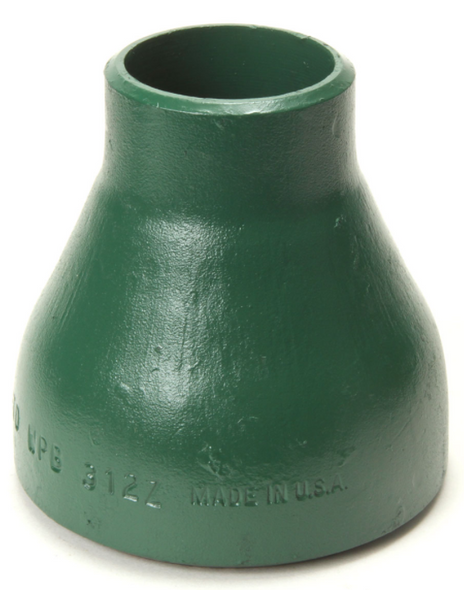
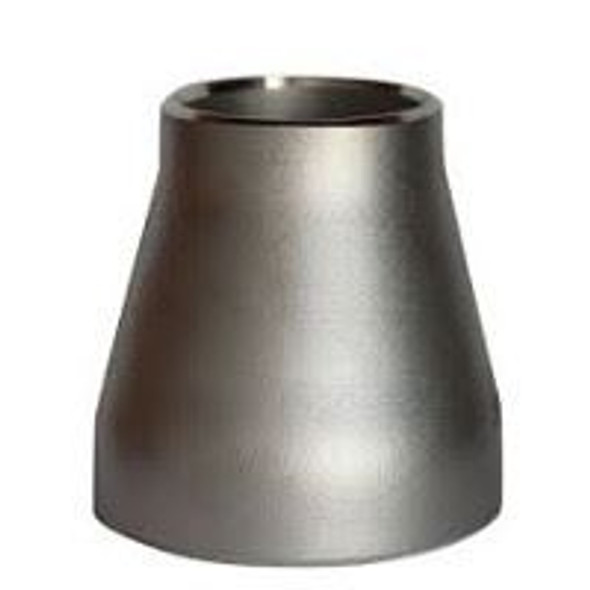
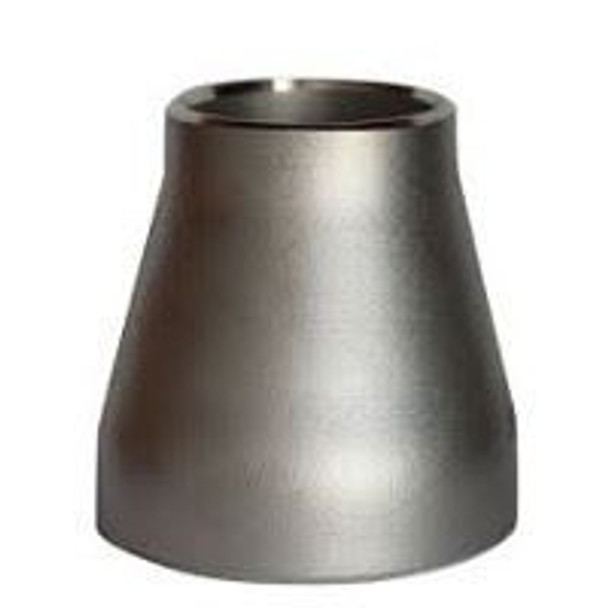
Aluminum Weld Concentric Reducer
- SKU:
- 16CC
- Availability:
- Usually Ships Same Day
- Weight:
- 0.00 LBS
- Ships From:
- Los Angeles, California


Description
Aluminum Weld Concentric Reducer
Aluminum Weld Concentric Reducers are designed for welded aluminum piping systems requiring a transition between two different pipe sizes while maintaining a common centerline. Manufactured from 6061-T6 aluminum, these seamless reducers are available in Schedule 40 and Schedule 80 configurations.
Made in the USA, these concentric reducers provide a centered size transition for compatible fabricated aluminum piping systems while maintaining the lightweight and corrosion-resistant characteristics of aluminum.
Product Highlights
- Concentric reducer configuration
- Designed to transition between different pipe sizes
- Maintains a common centerline through the size transition
- 6061-T6 aluminum construction
- Schedule 40 and Schedule 80
- Seamless construction
- Designed for welded aluminum piping systems
- Domestic origin
- Made in the USA
Technical Specifications
| Product Type | Weld Concentric Reducer |
|---|---|
| Material | 6061-T6 Aluminum |
| Construction | Seamless |
| Available Schedules | Schedule 40 & Schedule 80 |
| Connection Type | Weld |
| Configuration | Concentric Size Reduction |
| Alignment | Common Centerline |
| Origin | Domestic - Made in the USA |
Concentric Reducer Design
A concentric reducer transitions from a larger pipe size to a smaller pipe size while keeping the inlet and outlet on the same centerline. This symmetrical configuration provides a centered transition within a welded piping system.
Concentric reducers are commonly selected where maintaining axial alignment between different pipe sizes is important to the piping layout.
6061-T6 Aluminum Technical Information
6061-T6 aluminum combines relatively high strength with the lightweight and corrosion-resistant characteristics associated with aluminum alloys. The T6 temper indicates the material has been solution heat treated and artificially aged.
| Minimum Ultimate Tensile Strength | 42,000 psi (300 MPa) |
|---|---|
| Typical Ultimate Tensile Strength | 45,000 psi (310 MPa) |
| Minimum Yield Strength | 35,000 psi (241 MPa) |
| Typical Yield Strength | 40,000 psi (275 MPa) |
| Elongation - 0.250" Thick or Less | 8% or Greater |
| Elongation - Thicker Sections | 10% |
| Typical Thermal Conductivity at 80°C | Approximately 152 W/m K |
| Published Fatigue Limit | 14,000 psi (100 MPa) at 500,000,000 Completely Reversed Cycles |
T651 temper has similar mechanical properties to T6 temper.
The published fatigue value is based on testing using a standard RR Moore test machine and specimen. Aluminum does not exhibit a clearly defined fatigue-limit knee on an S-N curve, so the number of cycles considered equivalent to infinite life can vary depending on the engineering approach used.
Actual fatigue performance in an application can also be significantly affected by loading conditions, stress gradients, surface finish, fabrication methods, weld quality, and other application-specific de-rating factors.
Mechanical Properties
Tensile & Yield Strength
6061-T6 aluminum has an ultimate tensile strength of at least 42,000 psi (300 MPa) and a yield strength of at least 35,000 psi (241 MPa). Typical values are approximately 45,000 psi (310 MPa) ultimate tensile strength and 40,000 psi (275 MPa) yield strength.
Elongation
For material thicknesses of 0.250" (6.35 mm) or less, elongation is 8% or greater. In thicker sections, elongation is approximately 10%.
Thermal & Fatigue Characteristics
Thermal Conductivity
The typical thermal conductivity value for 6061-T6 aluminum at 80°C is approximately 152 W/m K.
Fatigue Performance
A published material-data value defines a fatigue limit of approximately 14,000 psi (100 MPa) for 500,000,000 completely reversed cycles using a standard RR Moore test machine and specimen.
Schedule 40 & Schedule 80 Options
Schedule 40
Schedule 40 configurations are available for aluminum piping systems using compatible Schedule 40 pipe dimensions and wall thicknesses.
Schedule 80
Schedule 80 configurations are available for piping systems requiring compatibility with Schedule 80 aluminum pipe dimensions and wall thicknesses.
Product Features
Centered Size Transition
The concentric design keeps the larger and smaller pipe ends on the same centerline while transitioning between nominal pipe sizes.
Seamless Construction
Seamless construction provides a continuous reducer body for incorporation into compatible welded aluminum piping assemblies.
Common Applications
Fabricated Piping Systems
- Aluminum piping assemblies
- Welded piping systems
- Industrial fabrication
- Mechanical piping installations
- Process piping applications
Pipe Size Transitions
- Reducing from larger to smaller pipe sizes
- Centered piping transitions
- Equipment connections
- Distribution piping
- Custom aluminum piping assemblies
Product Documentation
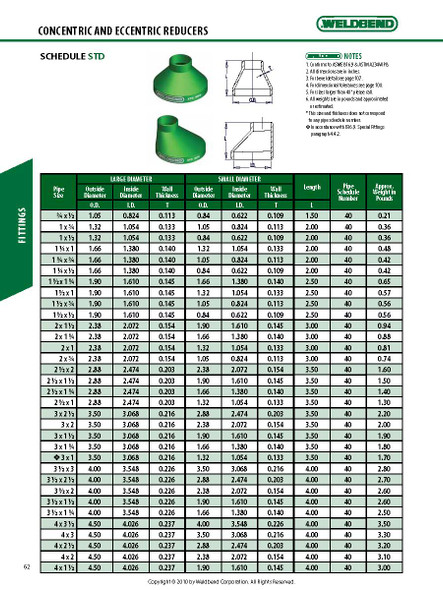
Pipe Diameter & Wall Thickness Chart
Use the pipe chart to review common pipe diameters and wall thicknesses when selecting compatible reducer sizes and schedules.
Need Help Selecting an Aluminum Concentric Reducer?
Our industrial PVF specialists can help confirm larger-end size, smaller-end size, schedule, material, and welding requirements before you order.
Frequently Asked Questions
What material are these concentric reducers made from?
These reducers are manufactured from 6061-T6 aluminum.
What schedules are available?
The reducers are available in Schedule 40 and Schedule 80 configurations.
Are these reducers seamless?
Yes. These aluminum weld concentric reducers are identified as seamless.
What is a concentric reducer used for?
A concentric reducer transitions between two different pipe sizes while keeping the larger and smaller ends on the same centerline.
What is the difference between a concentric and eccentric reducer?
A concentric reducer maintains a common centerline between both pipe sizes. An eccentric reducer offsets the centerline of one end relative to the other.
What is the tensile strength of 6061-T6 aluminum?
The original material information lists a minimum ultimate tensile strength of 42,000 psi (300 MPa), with a typical value of approximately 45,000 psi (310 MPa).
What is the yield strength of 6061-T6 aluminum?
The minimum listed yield strength is 35,000 psi (241 MPa), with a typical value of approximately 40,000 psi (275 MPa).
What elongation values are associated with 6061-T6?
Material thicknesses of 0.250" (6.35 mm) or less have elongation of 8% or greater, while thicker sections have elongation of approximately 10%.
What is the typical thermal conductivity of 6061-T6?
The original technical information lists a typical thermal conductivity of approximately 152 W/m K at 80°C.
What fatigue information is provided for 6061-T6?
The original material information lists a fatigue limit of approximately 14,000 psi (100 MPa) for 500,000,000 completely reversed cycles using a standard RR Moore test machine and specimen. Actual application performance can vary based on loading, surface finish, fabrication, and other factors.
Are these reducers designed to be welded?
Yes. They are designed for incorporation into compatible welded aluminum piping systems.
Are these aluminum reducers made in the USA?
Yes. These reducers are identified as domestic products made in the USA.
Important Ordering Notes
- Material: 6061-T6 aluminum.
- Configuration: Weld Concentric Reducer.
- Seamless construction.
- Available in Schedule 40 and Schedule 80.
- Domestic origin - Made in the USA.
- Confirm both larger and smaller nominal pipe sizes before ordering.
- Confirm the required schedule and compatible pipe wall thicknesses.
- Confirm welding procedures and material compatibility for the intended piping system.
- Mechanical and fatigue performance can vary based on application conditions, fabrication, loading, surface finish, and other engineering factors.
- Refer to the pipe chart for common pipe diameters and wall thicknesses.