

Lesso America
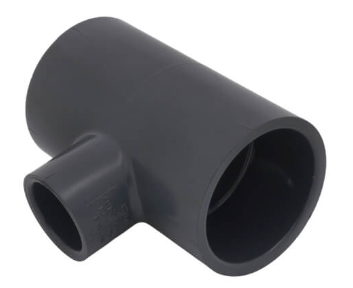
Schedule 80 PVC Reducing Tee (SOC x SOC x SOC)

- SKU:
- 801R
- Availability:
- Usually Ships Same Day
- Weight:
- 0.00 LBS
- Note Sizing Reads:
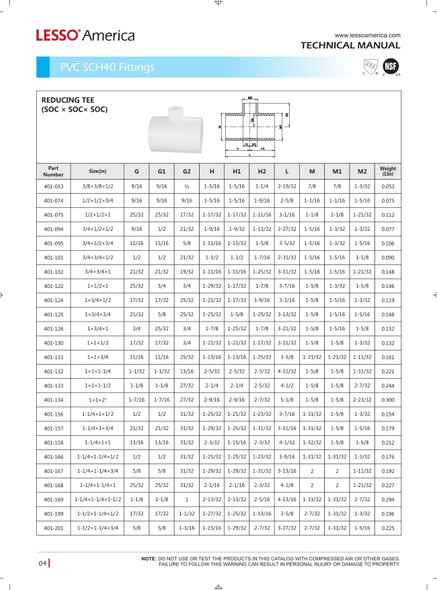
- End x End x Middle (Middle = Outlet)




Description
Schedule 80 PVC Socket Reducing Tee (SOC x SOC x SOC)
Schedule 80 PVC Socket Reducing Tees provide a durable branch connection while transitioning between different nominal pipe sizes in compatible pressure piping systems.
Featuring three socket connections, this fitting is designed for solvent-weld installation with compatible Schedule 80 PVC pipe. The reducing tee configuration allows a branch or run connection to use a different pipe size while maintaining the heavier-wall construction, corrosion resistance, and long-term durability associated with Schedule 80 PVC systems.
Product Highlights
- Schedule 80 PVC reducing tee fitting
- Socket x Socket x Socket connection configuration
- Creates a 90-degree branch connection
- Connects different nominal pipe sizes within one fitting
- Heavy-wall Schedule 80 PVC construction
- Designed for solvent-weld installation
- Excellent corrosion and chemical resistance
- Suitable for compatible pressure piping applications
- Certified to NSF/ANSI 61 for drinking water system components
- Certified to NSF/ANSI 14 for plastic piping system components
- Manufactured from PVC compounds meeting ASTM D1784
- Manufactured in accordance with ASTM F1970
- Complies with CSA B137.3
Technical Specifications
| Product Type | Schedule 80 PVC Socket Reducing Tee |
|---|---|
| Material | PVC |
| Schedule | Schedule 80 |
| Connection Type | Socket (SOC) x Socket (SOC) x Socket (SOC) |
| Joint Method | Solvent Weld |
| Branch Angle | 90° |
| Configuration | Reducing Tee |
| System Type | Schedule 80 PVC Pressure Piping |
| Primary Function | Branch Connection with Pipe Size Reduction |
| Referenced Standards | ASTM D1784, ASTM F1970, CSA B137.3, NSF/ANSI 14, NSF/ANSI 61 |
Connection Configuration
Run Inlet Socket
The first socket accepts compatible Schedule 80 PVC pipe as part of the main pressure piping run.
Reducing Branch Socket
The branch connection creates a 90-degree outlet and may be a different nominal size than the main run, depending on the selected fitting variation.
Run Outlet Socket
The opposite socket continues the main Schedule 80 PVC piping run.
Construction Details
The fitting is manufactured from high-quality Schedule 80 PVC, providing increased wall thickness and dependable durability for compatible pressure piping applications.
All three socket connections are designed for solvent-cement joining to compatible Schedule 80 PVC pipe, creating strong and dependable joints when properly installed.
The reducing tee geometry combines a branch connection and pipe-size transition within one fitting, helping simplify layouts that would otherwise require additional reducing components.
Why Choose a Schedule 80 Reducing Tee?
Branch & Reduce in One Fitting
- Creates a 90° branch connection
- Allows different nominal pipe sizes
- Can reduce the need for separate bushings or reducers
- Useful for distribution and equipment branches
- Supports compact piping layouts
Schedule 80 PVC Benefits
- Heavy-wall construction
- Corrosion-resistant material
- Resistant to many common chemicals
- Low-maintenance design
- Suitable for demanding compatible pressure applications
Referenced Standards
- NSF/ANSI 61: Drinking water system components - health effects
- NSF/ANSI 14: Plastic piping system components and related materials
- ASTM D1784: Rigid PVC and CPVC compounds
- ASTM F1970: Special engineered fittings, appurtenances, or valves for PVC or CPVC systems
- CSA B137.3: Rigid PVC pipe and fittings for pressure applications
Solvent-Weld Installation
Verify all three nominal connection sizes before installation. Reducing tees can have different run and branch dimensions, so confirm the size orientation of the specific fitting variation before cutting pipe.
Cut compatible Schedule 80 PVC pipe square and remove burrs from each pipe end. Clean and prepare all mating surfaces according to accepted PVC solvent-weld procedures.
Apply approved PVC primer and solvent cement as required, then fully seat each pipe into the correct socket. Confirm the branch orientation and size arrangement before the solvent cement begins to set.
Allow completed joints to cure according to the cement manufacturer's recommendations before pressurizing or placing the system into normal service.

Our piping specialists can help review your run size, branch size, pressure requirements, chemical compatibility, and solvent-weld installation needs before you order.
Email the GetPipe.com Team Visit Quick SupportFrequently Asked Questions
What is a Schedule 80 PVC reducing tee used for?
It is used to create a 90-degree branch connection while transitioning between different nominal pipe sizes in a compatible Schedule 80 PVC pressure system.
What type of connections does this fitting use?
All three openings are socket connections designed for solvent-weld installation with compatible Schedule 80 PVC pipe.
How is a reducing tee different from a standard tee?
A standard tee typically uses the same nominal size at all three connections, while a reducing tee has at least one connection that is a different size.
Is the reduced connection always the branch?
Not necessarily. The exact size arrangement depends on the specific fitting variation, so all connection dimensions should be verified before ordering.
Can this fitting be used for drinking water systems?
The supplied product information identifies NSF/ANSI 61 certification for drinking water system components.
What does NSF/ANSI 14 cover?
NSF/ANSI 14 applies to plastic piping system components and related materials.
What ASTM standards are referenced?
The supplied information references ASTM D1784 and ASTM F1970.
What CSA standard is referenced?
The supplied information references CSA B137.3 for rigid PVC pipe and fittings used in pressure applications.
What should I verify before ordering?
Confirm all three nominal connection sizes, which connection is reduced, the branch orientation, pressure requirements, temperature requirements, and compatibility with the intended Schedule 80 PVC system.
Important Ordering & Installation Notes
- This listing is for a Schedule 80 PVC Socket Reducing Tee.
- Verify all three nominal connection sizes before ordering.
- Do not assume the branch is the only reduced connection; confirm the size arrangement for the selected variation.
- All three openings are socket connections.
- The fitting creates a 90-degree branch connection while incorporating a pipe-size transition.
- Use compatible Schedule 80 PVC pipe and approved solvent-weld installation methods.
- Use approved PVC primer and solvent cement as required.
- Cut pipe square before installation.
- Remove burrs and clean all mating surfaces before solvent welding.
- Fully seat each pipe into the correct socket.
- Confirm branch orientation and size arrangement before the solvent cement begins to set.
- Allow solvent-weld joints to cure according to the cement manufacturer's recommendations before pressurizing the system.
- Verify operating pressure and temperature requirements before installation.
- Verify chemical compatibility with the intended fluid or process media.
- Consult manufacturer documentation for complete dimensions and pressure ratings.
- Follow applicable plumbing codes and manufacturer installation recommendations.