



Description
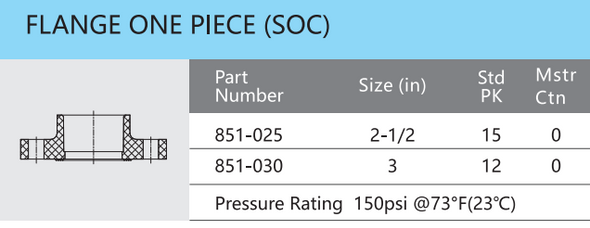
Schedule 80 One Piece Flange (Socket)
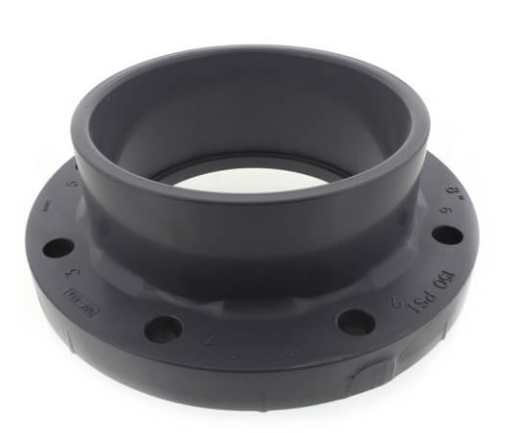
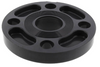
Schedule 80 One Piece Flange (Socket) provides a flanged transition for compatible Schedule 80 piping using an integrated one-piece flange body and socket connection. The socket receives appropriately sized compatible pipe while the flange face provides the mating interface needed to connect the piping run to a compatible flanged component.
The one-piece socket flange configuration combines the flange body and hub into a single fitting for a straightforward transition from socket-connected piping to a bolted flange joint. Selection should account for nominal size, Schedule 80 compatibility, socket fit, mating flange requirements, gasket selection, bolt alignment, piping support, and available assembly clearance.
Product Highlights
- Socket connection
- Schedule 80 design
- One-piece construction
- Flanged transition fitting
- Provides a fixed flange interface
- Connects compatible pipe to flanged equipment
- Combines a socket hub and flange in one fitting
- Supports bolted flange connections in Schedule 80 piping layouts
Technical Specifications
| Product Type | One Piece Flange |
|---|---|
| Schedule | Schedule 80 |
| Connection | Socket (SOC) |
| Fitting Configuration | One-Piece Flange |
| Pipe Interface | Compatible Pipe |
| Flange Configuration | Fixed One-Piece Body |
| Connection Style | Socket x Flange |
| Pipe Joining Method | Compatible Socket Joining Procedure |
| Flange Joining Method | Bolted Mechanical Connection |
| Piping Configuration | Socket-to-Flange Transition |
| Assembly Style | Integrated Flange and Hub |
| Primary Function | Transition Compatible Schedule 80 Piping to a Flanged Connection |
One-Piece Flange Design
The one-piece flange configuration integrates the flange and socket hub into a single fitting rather than using a separate rotating ring arrangement. This fixed construction provides a direct transition between compatible Schedule 80 piping and a mating flanged component while keeping the flange interface permanently oriented with the socket hub.
Because the flange body does not rotate independently after the socket connection is completed, bolt-hole orientation should be considered during installation planning. Establishing the required flange position before permanent joining helps coordinate the mating component, adjoining piping, gasket placement, and fastener alignment during final assembly.
Socket Connection
The socket connection provides a receiving interface for appropriately sized compatible pipe and establishes the piping-side connection to the flange. Proper preparation and insertion are important because the final position of the socket joint also determines the orientation of the fixed one-piece flange body.
The mating pipe and socket surfaces should be prepared using installation practices appropriate for the piping material and system. Adequate insertion, correct alignment, compatible joining materials, and careful positioning help establish the socket connection without relying on the flange assembly to correct improperly aligned adjoining piping.
Flanged Connection
The flanged interface allows the fitting to connect with a compatible mating flange using a gasket and appropriate flange fasteners. This type of connection provides a mechanical joint between the piping and adjoining flanged equipment, valves, fittings, or other compatible system components at the selected connection point.
The mating flange faces should approach one another in proper alignment before the fasteners are tightened. Correct gasket positioning and an even tightening sequence help distribute assembly forces around the joint while reducing the possibility of placing unnecessary bending or alignment loads on the one-piece flange body.
Schedule 80 Piping Integration
A Schedule 80 One Piece Flange provides a practical transition where socket-connected piping must terminate at a compatible flanged connection. Its integrated construction can simplify the fitting arrangement by combining the socket hub and fixed flange interface into one component at the end of the piping run.
Application suitability should be evaluated using the requirements of the complete piping system rather than the schedule designation alone. Mating flange compatibility, service conditions, gasket selection, adjoining materials, joining requirements, piping support, installation environment, and applicable practices should all be considered during flange selection.
Installation & Selection Considerations
- Confirm the nominal size.
- Verify the mating flange style.
- Check Schedule 80 compatibility.
- Confirm the required socket connection.
- Allow clearance for flange bolts and assembly.

Our fitting specialists can help review your nominal size, Schedule 80 requirements, socket connection, mating flange configuration, gasket requirements, bolt alignment, adjoining piping, installation orientation, piping support, and available assembly clearance before you order.
Frequently Asked Questions
What is a Schedule 80 One Piece Flange used for?
It provides a transition between compatible Schedule 80 piping and a mating flanged component using an integrated flange body and socket connection.
What does one-piece flange mean?
It means the flange and socket hub are integrated into a single fitting rather than using a separate rotating flange ring.
What does the socket connection receive?
The socket connection receives an appropriately sized compatible pipe for the applicable joining procedure.
Does the flange rotate independently?
No. A one-piece flange has a fixed flange body, so its orientation should be established before the socket connection is permanently joined.
Does the flange joint require a gasket?
A compatible gasket is typically positioned between the mating flange faces as part of the completed bolted flange assembly.
Why is bolt-hole alignment important?
Proper alignment allows the mating flange and fasteners to assemble without using the bolts to force misaligned piping or components into position.
Should the adjoining piping be independently supported?
Yes. Suitable piping support helps prevent unnecessary external loads from being transferred to the socket connection and flange body.
What should I confirm before ordering?
Confirm the nominal size, Schedule 80 requirement, socket connection, mating flange compatibility, gasket requirements, bolt arrangement, and available installation clearance.
Important Ordering & Installation Notes
- Inspect the flange before use.
- Center the gasket before bolting.
- Align both flange faces before assembly.
- Tighten flange fasteners evenly in sequence.
- Support adjoining piping independently of the flange.