




Description
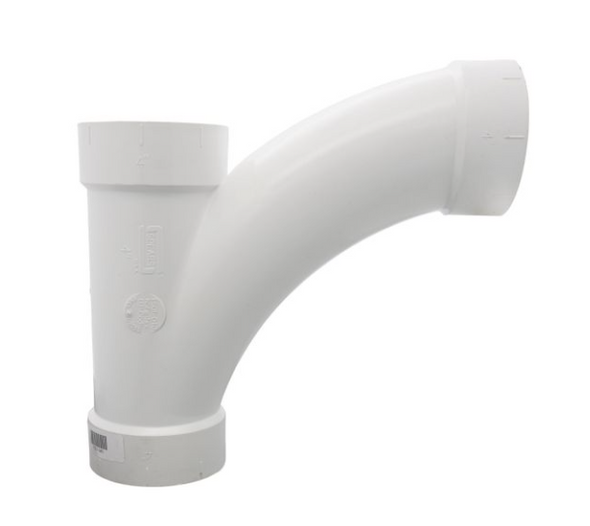
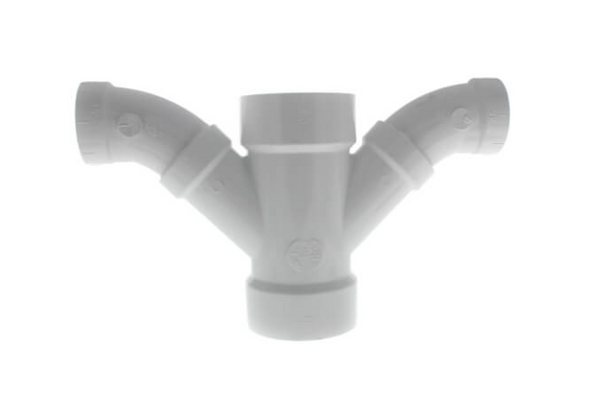
PVC DWV Return Bend
PVC DWV Return Bend provides a compact change in piping direction within compatible PVC drain, waste, and vent systems. The return bend configuration redirects the piping path through a curved fitting arrangement while connecting compatible PVC DWV components.
The return bend configuration is intended for compatible piping layouts where the line must reverse or redirect within a confined area. Selection should account for nominal size, adjoining pipe, fitting orientation, joining requirements, piping alignment, support, and available installation clearance.
Product Highlights
- PVC construction
- DWV fitting design
- Return bend configuration
- Curved piping transition
- Provides a directional change
- Connects compatible PVC DWV components
- Supports compact drainage piping layouts
- Redirects the piping path within compatible drain, waste, and vent systems
Technical Specifications
| Product Type | Return Bend |
|---|---|
| Material | PVC |
| System Type | DWV |
| Fitting Configuration | Return Bend |
| Connection Function | Directional Transition |
| Connection Interface | Compatible PVC DWV Components |
| Piping Function | Redirect Piping Path |
| Joining Method | Compatible PVC DWV Joining Procedure |
| Installation Orientation | As Required by Piping Layout |
| Material Compatibility | Compatible PVC DWV Piping |
| Primary Function | Provide a Compact Directional Change Within Compatible PVC DWV Piping |
| Selection Requirement | Match Nominal Size and Required Piping Orientation |
Return Bend Design
The return bend configuration redirects the piping path through a compact curved fitting. This allows compatible PVC DWV piping to change direction within layouts where a return-style transition is required.
The bend orientation should be established before permanent joining so both adjoining components correspond with the intended piping route. Planning the position helps coordinate nearby fittings, piping support, and available working clearance.
Directional Transition
The curved fitting configuration allows the connected piping to redirect through the return bend without requiring multiple separate fittings at the same location. Each adjoining component should be matched to the correct nominal size before assembly.
The connected piping should align naturally with the bend before final joining. Proper alignment helps reduce unnecessary mechanical stress on the fitting and adjoining PVC DWV components.
PVC DWV Integration
The PVC DWV construction allows the return bend to integrate into compatible drain, waste, and vent piping arrangements requiring a directional change. Matching the nominal size and connection interfaces to the adjoining components helps maintain the intended piping configuration.
Application suitability should be evaluated using the requirements of the complete DWV system. Adjoining materials, connection compatibility, joining materials, piping support, slope where applicable, and local installation requirements should all be considered during fitting selection.
Compact Piping Layout
A PVC DWV Return Bend provides a compact method of redirecting compatible piping where available installation space or layout requirements call for a return-style fitting. The fitting should be oriented according to the intended flow path and adjoining components.
Installation planning should consider fitting orientation, adjoining pipe alignment, nearby components, available clearance, and piping support. Connected piping should not be forced into position to compensate for offsets or poor alignment.
Installation & Selection Considerations
- Confirm the nominal size.
- Verify the return bend configuration.
- Check PVC DWV compatibility.
- Confirm the required fitting orientation.
- Align adjoining piping before assembly.

Our PVC fitting specialists can help review your nominal size, DWV requirements, return bend configuration, adjoining PVC components, fitting orientation, joining requirements, piping alignment, support requirements, and available installation clearance before you order.
Frequently Asked Questions
What is a PVC DWV Return Bend used for?
It provides a compact directional change within compatible PVC drain, waste, and vent piping.
What does DWV mean?
DWV refers to drain, waste, and vent piping applications.
Why is this fitting called a return bend?
The curved fitting configuration redirects the piping path through a return-style directional transition.
Does fitting orientation matter?
Yes. The bend should be positioned according to the intended piping route and adjoining component arrangement.
How is the fitting assembled?
Compatible PVC DWV components should be joined using the appropriate preparation and joining procedure for the installation.
What should I confirm before ordering?
Confirm the nominal size, return bend configuration, PVC DWV compatibility, and required piping orientation.
Important Ordering & Installation Notes
- Inspect all connections before use.
- Confirm the nominal connection size.
- Verify the intended piping direction.
- Prepare adjoining components correctly.
- Confirm alignment before final assembly.