

Lesso America
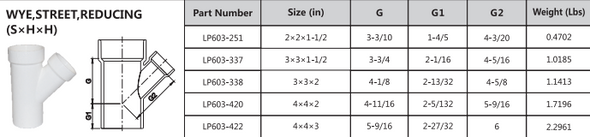
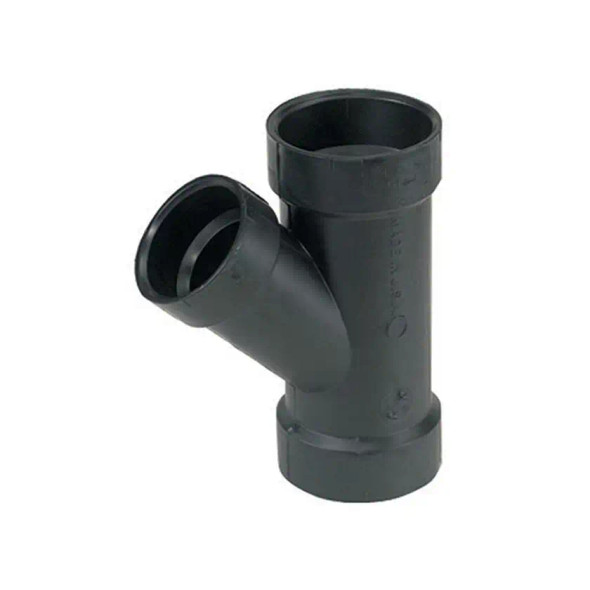
PVC DWV Reducing Wye (HUB x HUB x HUB)

- SKU:
- LP601
- Availability:
- Usually Ships Same Day
- Weight:
- 0.00 LBS



Description
PVC DWV Reducing Wye (Hub x Hub x Hub)
PVC DWV Reducing Wye Fittings provide a smooth branch connection while transitioning between different pipe sizes in non-pressure drain, waste, and vent systems.
Featuring hub connections on all three openings, this fitting accepts compatible PVC DWV pipe for permanent solvent-weld installation. The reducing wye configuration allows a smaller branch or run connection to join a larger DWV line through a gradual angled transition that helps support efficient gravity flow.
Product Highlights
- PVC DWV reducing wye fitting
- Hub x Hub x Hub connection configuration
- Connects compatible DWV pipe of different sizes
- Creates a gradual branch connection
- Designed for drain, waste, and vent systems
- All three hubs accept compatible PVC DWV pipe
- Solvent-weld installation
- Smooth branch geometry supports efficient drainage flow
- Durable corrosion-resistant PVC construction
- Lightweight and easy to install
- Designed for non-pressure applications
Technical Specifications
| Product Type | DWV Reducing Wye |
|---|---|
| Material | PVC |
| Connection Type | Hub x Hub x Hub |
| Joint Method | Solvent Weld |
| System Type | Drain, Waste & Vent (DWV) |
| Pressure Service | Non-Pressure |
| Primary Function | Reducing Branch Connection |
| Referenced Standards | ASTM D2665, ASTM D1784, CSA B181.2, and Applicable NSF/ANSI Standards |
| Typical Applications | Residential, Commercial, and Institutional DWV Systems |
Connection Configuration
Main Run Inlet
The first hub accepts compatible PVC DWV pipe as part of the main drainage run.
Reducing Branch
The angled branch hub accommodates a different nominal pipe size while providing a gradual transition into the main run.
Main Run Outlet
The opposite hub continues the primary DWV piping run with compatible PVC pipe.
Construction Details
The fitting is manufactured from high-quality PVC for resistance to corrosion, chemicals, moisture, and long-term wear in compatible drain, waste, and vent systems.
All three hub connections are designed for solvent-cement joining to compatible PVC DWV pipe, creating secure permanent joints when properly installed.
The reducing wye geometry combines a pipe-size transition with a gradual branch entry, helping support efficient gravity drainage while minimizing abrupt changes in direction.
Why Choose a Reducing Wye?
Smooth Branch Transition
- Creates a gradual branch connection
- Supports efficient gravity drainage
- Reduces abrupt directional changes
- Useful for horizontal branch connections
- Suitable for new installations and repairs
Integrated Size Reduction
- Connects compatible pipe of different sizes
- Can reduce the need for a separate reducer
- Simplifies some DWV layouts
- Supports compact branch transitions
- Maintains permanent solvent-weld joints
Typical Applications
Residential DWV Systems
- Building drains
- Fixture waste branches
- Horizontal drainage runs
- Reducing branch connections
- Pipe-size transitions
Commercial & Institutional DWV
- Commercial drainage systems
- Building waste piping
- Branch line transitions
- Repair and retrofit work
- Institutional plumbing systems
Solvent-Weld Installation
Verify the nominal size of every hub before installation, since reducing wyes may use different sizes at the branch and main run connections.
Cut compatible PVC DWV pipe square, remove burrs, and clean all mating surfaces. Apply compatible PVC primer and solvent cement where required, then fully seat each pipe into the correct hub.
Confirm the branch orientation and pipe-size placement before the solvent cement begins to set. Allow all completed joints to cure according to the cement manufacturer's recommendations before placing the system into normal service.
Our plumbing specialists can help review your main run size, branch size, flow direction, and solvent-weld installation requirements before you order.
Email the GetPipe.com Team Visit Quick SupportFrequently Asked Questions
What is a PVC DWV reducing wye?
It is a three-opening DWV fitting that creates a gradual branch connection while joining compatible PVC pipe of different nominal sizes.
What does Hub x Hub x Hub mean?
It means all three openings are hub or socket connections designed to accept compatible PVC DWV pipe.
How is a reducing wye different from a standard wye?
A standard wye generally connects matching nominal sizes, while a reducing wye includes at least one connection of a different nominal size.
What is the main advantage of the wye configuration?
The angled branch provides a smoother transition into the main run than a perpendicular branch, helping support efficient gravity flow.
Do I need a separate reducer?
Not necessarily. The fitting incorporates a size transition, which may eliminate the need for a separate reducer in compatible layouts.
How is the fitting installed?
All three hub connections are installed using compatible PVC solvent-weld procedures.
Is this fitting intended for pressure piping?
No. This fitting is intended for non-pressure drain, waste, and vent applications.
What material is the fitting made from?
The fitting is manufactured from durable, corrosion-resistant PVC.
What standards are referenced for this fitting?
The supplied product information references ASTM D2665, ASTM D1784, CSA B181.2, and applicable NSF/ANSI standards.
What should I verify before ordering?
Confirm every nominal connection size, which connection is reduced, the branch orientation, and compatibility with the intended PVC DWV system.
Important Ordering & Installation Notes
- This listing is for a PVC DWV Reducing Wye with Hub x Hub x Hub connections.
- Verify the nominal size of all three connections before ordering.
- Confirm which opening is reduced for the intended piping layout.
- All three hubs accept compatible PVC DWV pipe.
- The angled branch provides a gradual transition into the main run.
- The reducing configuration may eliminate the need for a separate reducer fitting.
- Designed for non-pressure drain, waste, and vent applications.
- Use compatible PVC primer and solvent cement where required.
- Cut pipe square before installation.
- Remove burrs and clean all mating surfaces before solvent welding.
- Fully seat each pipe into the correct hub.
- Confirm branch orientation and pipe-size placement before the solvent cement begins to set.
- Allow completed joints to cure according to the cement manufacturer's recommendations.
- Do not use this fitting for pressure applications.
- Follow applicable plumbing codes and manufacturer installation requirements.