

Midland Industries
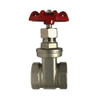
Midland Stainless Steel Gate Valve

- Availability:
- Allow 2-3 Days to Ship
- Weight:
- 0.00 LBS




Description
Midland Stainless Steel Gate Valve
Midland Stainless Steel Gate Valves are designed for dependable full-open or full-closed isolation in commercial and industrial piping systems.
Constructed with a corrosion-resistant stainless steel body, these valves feature female threaded pipe connections, a full-port gate design, and rising stem handwheel operation. When fully open, the gate moves out of the flow path to help minimize pressure loss through the valve.
Product Highlights
- Midland stainless steel gate valve
- Corrosion-resistant stainless steel body
- Female threaded pipe connections
- Full-port gate design
- Rising stem configuration
- Manual handwheel operation
- Designed for full-open or full-closed service
- Provides clear visual indication of valve position
- Suitable for compatible water, steam, air, oil, and process media
- Available in multiple pipe sizes
Technical Specifications
| Product Type | Gate Valve |
|---|---|
| Brand | Midland |
| Body Material | Stainless Steel |
| Connection Type | Female Threaded |
| Port Style | Full Port |
| Stem Style | Rising Stem |
| Operator | Manual Handwheel |
| Operation | Multi-Turn |
| Primary Function | On/Off Isolation |
| Available Sizes | Multiple Pipe Sizes |
| Typical Media | Water, Steam, Air, Oil, and Other Compatible Process Media |
Valve Configuration
Female Threaded Ends
Threaded end connections provide straightforward installation into compatible piping systems without requiring flanged or welded connections.
Rising Stem
The stem rises as the valve opens, providing a convenient visual indication of valve position during operation.
Full-Port Gate
When fully open, the gate moves out of the primary flow path to help minimize restriction and pressure drop.
Construction Details
The stainless steel valve body provides excellent corrosion resistance and dependable mechanical durability for compatible commercial and industrial service.
The precision-machined gate and seating surfaces are designed to provide reliable shutoff when the valve is fully closed.
A multi-turn handwheel moves the rising stem and gate gradually through the open and closed positions for controlled manual operation.
Why Choose a Gate Valve?
Low Flow Restriction
- Full-port internal opening
- Gate moves out of the flow path when open
- Helps minimize pressure drop
- Suitable for pipeline isolation
- Useful where unrestricted flow is important
Positive Isolation
- Designed for full-open or full-closed service
- Multi-turn operation
- Reliable shutoff capability
- Suitable for equipment isolation
- Common in commercial and industrial piping
Rising Stem Design
Visible Valve Position
As the handwheel is operated, the stem rises or lowers with the gate, making valve position easier to identify visually.
Clearance Requirements
Because the stem rises as the valve opens, adequate vertical clearance should be provided above the valve during installation.
Stainless Steel Construction
Corrosion Resistance
Stainless steel construction provides useful resistance to corrosion in many compatible water, steam, air, oil, and process applications.
Long Service Life
The durable valve body is designed for repeated operation and dependable service when properly matched to system conditions.
Typical Applications
Commercial & Industrial Systems
- Mechanical piping
- Industrial utility systems
- Equipment isolation
- Process support piping
- General plant service
Compatible Media
- Water
- Steam
- Compressed air
- Oil
- Compatible process fluids
Gate Valve vs. Ball Valve
Gate Valve
A gate valve uses a multi-turn handwheel to raise or lower a gate through the flow path and is primarily intended for full-open or full-closed isolation.
Ball Valve
A ball valve uses a rotating ball and typically provides quick quarter-turn operation for fast opening and closing.

Our valve, fitting, and industrial product specialists can help review your valve size, FIP connection requirements, pressure rating, handle configuration, media compatibility, and application before you order.
Email the GetPipe.com Team Visit Quick SupportFrequently Asked Questions
What type of valve is this?
This is a stainless steel rising stem gate valve designed primarily for on/off isolation service.
What material is the valve body?
The supplied product information identifies stainless steel body construction.
What type of connections does it use?
The valve uses female threaded pipe connections.
Is this a full-port valve?
Yes. The supplied product information identifies a full-port gate design intended to minimize pressure drop when fully open.
What does rising stem mean?
The valve stem moves upward as the valve opens, providing a visible indication of the gate position.
How is the valve operated?
The valve uses a manual handwheel with multi-turn operation.
Can this valve be used for throttling?
Gate valves are generally intended for full-open or full-closed isolation and should not normally be used for throttling unless specifically approved by the manufacturer.
What media can this valve handle?
The supplied information identifies water, steam, air, oil, and other compatible process media, subject to the valve's pressure, temperature, and material limitations.
What should I verify before ordering?
Confirm valve size, thread compatibility, pressure and temperature requirements, media compatibility, and available stem clearance before ordering.
Important Ordering & Installation Notes
- This listing is for Midland Stainless Steel Gate Valves.
- Confirm the required valve size before ordering.
- Verify female thread compatibility with the intended piping system.
- Gate valves are intended primarily for full-open or full-closed service.
- Avoid prolonged throttling unless specifically permitted by the manufacturer.
- Provide adequate vertical clearance for the rising stem.
- Verify stainless steel compatibility with the intended media.
- Confirm system pressure and operating temperature requirements before installation.
- Use appropriate thread sealant where permitted.
- Avoid excessive installation torque that could damage the valve or threaded connections.
- Support connected piping to prevent unnecessary mechanical load on the valve.
- Do not force the handwheel if the valve becomes difficult to operate.
- Cycle the valve after installation to confirm smooth stem and gate movement.
- Fully isolate and depressurize the system before performing maintenance.
- Install according to applicable piping codes, project requirements, and manufacturer recommendations.