

Midland Industries
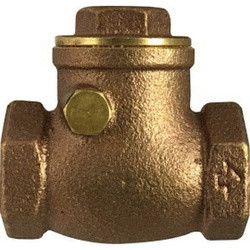
Midland 316 Stainless Steel Swing Check Valve

- Availability:
- Allow 2-3 Days to Ship
- Weight:
- 0.00 LBS




Description
Midland 316 Stainless Steel Swing Check Valve
Midland 316 Stainless Steel Swing Check Valves are designed to automatically prevent reverse flow in compatible liquid piping systems without requiring external controls.
The internal swing disc opens with forward flow and closes when flow stops or reverses, helping protect pumps, piping, valves, and other downstream equipment. Constructed from corrosion-resistant 316 stainless steel with female threaded connections, these valves are well suited for commercial, industrial, plumbing, irrigation, and general fluid handling applications.
Product Highlights
- Midland swing-type check valve
- 316 stainless steel construction
- Automatically prevents reverse flow
- Female threaded pipe connections
- Swing disc operation
- Low restriction during forward flow
- Serviceable threaded top cap
- Automatic operation with no external actuator required
- Suitable for compatible water and fluid service
- Available in multiple pipe sizes
Technical Specifications
| Product Type | Swing Check Valve |
|---|---|
| Brand | Midland |
| Body Material | 316 Stainless Steel |
| Connection Type | Female Threaded |
| Check Mechanism | Hinged Swing Disc |
| Operation | Automatic |
| Primary Function | Reverse Flow Prevention |
| Maintenance Access | Threaded Top Cap / Bonnet |
| Available Sizes | Multiple Pipe Sizes |
| Typical Applications | Commercial, Industrial, Plumbing, Irrigation, and General Fluid Handling Systems |
| Typical Media | Water and Other Compatible Fluids |
Valve Configuration
Swing Disc
The hinged internal disc swings open as fluid moves in the normal direction and closes when forward flow stops or reverses.
Female Threaded Ends
Female threaded connections provide straightforward installation into compatible commercial and industrial piping systems.
Serviceable Top Cap
The threaded bonnet provides access to internal components for inspection and maintenance when required.
Construction Details
The 316 stainless steel body provides excellent corrosion resistance and dependable durability for compatible piping environments.
The hinged internal disc moves freely with forward flow and closes against the valve seat when the flow direction reverses, helping prevent unwanted backflow.
A threaded top cap provides internal access for inspection and service while the compact inline body simplifies installation in a wide range of piping systems.
How a Swing Check Valve Works
Forward Flow
Normal system flow pushes the internal disc away from the seat, allowing fluid to pass through the valve.
Reverse Flow
When forward flow stops or reverses, the disc returns toward the seat and closes the flow path to help prevent backflow.
Why Use a Swing Check Valve?
Automatic Backflow Protection
- No manual operation required
- No external actuator required
- Responds automatically to flow direction
- Helps protect pumps and equipment
- Provides one-way flow control
Low Forward-Flow Restriction
- Disc swings out of the primary flow path
- Designed to minimize flow restriction
- Suitable for general liquid service
- Compact inline configuration
- Useful in continuous-flow piping systems
316 Stainless Steel Construction
Corrosion Resistance
316 stainless steel provides excellent resistance to corrosion in many compatible commercial, industrial, and process environments.
Durable Service
The stainless steel body is designed for dependable long-term service when properly matched to the system pressure, temperature, and media.
Typical Applications
Commercial & Industrial
- Water piping
- Industrial utility systems
- General process piping
- Pump discharge lines
- Equipment protection
General Fluid Handling
- Plumbing systems
- Irrigation systems
- Transfer lines
- Compatible liquid service
- Commercial mechanical piping
Swing Check vs. Spring Check Valve
Swing Check Valve
A swing check valve uses a hinged disc that moves with system flow. It generally provides a relatively unrestricted flow path when fully open.
Spring Check Valve
A spring check valve uses a spring-loaded internal element that closes positively as flow decreases. Selection should be based on system flow characteristics and installation requirements.

Our valve, fitting, and industrial product specialists can help review your valve size, FIP connection requirements, pressure rating, handle configuration, media compatibility, and application before you order.
Email the GetPipe.com Team Visit Quick SupportFrequently Asked Questions
What is this valve used for?
This valve is designed to automatically prevent reverse flow in compatible piping systems.
What material is the valve made from?
The supplied product information identifies 316 stainless steel construction.
How does the swing check mechanism work?
Forward flow swings the internal disc open. When flow stops or reverses, the disc closes against the seat to help prevent backflow.
Does the valve require manual operation?
No. Swing check valves operate automatically according to system flow direction.
What type of connections does it use?
The valve uses female threaded pipe connections.
Can the valve be serviced?
Yes. The supplied product information identifies a threaded top cap that provides access to internal components for inspection and maintenance.
What equipment can this valve help protect?
It can help protect pumps, valves, piping, and other equipment from reverse flow.
Does installation direction matter?
Yes. Install the valve with the flow arrow on the body pointing in the normal direction of system flow.
What should I verify before ordering?
Confirm valve size, thread compatibility, installation orientation, system pressure, operating temperature, and media compatibility before ordering.
Important Ordering & Installation Notes
- This listing is for Midland 316 Stainless Steel Swing Check Valves.
- Confirm the required nominal valve size before ordering.
- Verify female thread compatibility with the intended piping system.
- Install with the flow arrow pointing in the normal direction of system flow.
- Confirm the intended installation orientation is suitable for swing check operation.
- Verify 316 stainless steel compatibility with the intended media.
- Confirm system pressure and operating temperature requirements before installation.
- Use an appropriate thread sealant where permitted.
- Avoid excessive installation torque that could damage the valve or threaded connections.
- Support connected piping to prevent excessive mechanical load on the valve.
- Inspect the internal disc and seating surfaces periodically when system conditions require maintenance.
- Fully isolate, depressurize, and drain the system before removing the threaded top cap.
- Confirm free disc movement before returning a serviced valve to operation.
- Do not operate the system with the bonnet or internal components improperly installed.
- Follow applicable piping standards and manufacturer recommendations.