

Midland Industries
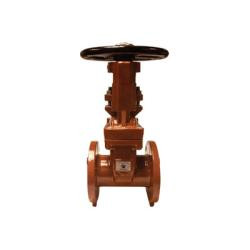
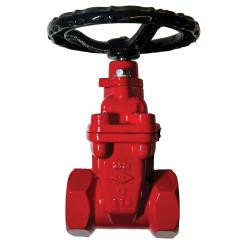
Midland Ductile Iron Gate Valve (IPS x IPS)
- Availability:
- Allow 2-3 Days to Ship
- Weight:
- 0.00 LBS



Description
Midland Ductile Iron Gate Valve (IPS x IPS)
Midland Ductile Iron Gate Valves (IPS x IPS) are designed for dependable shutoff in compatible water distribution and industrial piping systems.
Featuring a resilient seated wedge, non-rising stem design, heavy-duty ductile iron body, and IPS x IPS threaded end connections, these valves provide reliable sealing performance while maintaining a compact operating profile. Available in 2", 3", 4", and 6" sizes, they are suitable for aboveground and underground water service applications where durable isolation is required.
Product Highlights
- Midland ductile iron gate valve
- IPS x IPS threaded end connections
- Resilient seated wedge design
- Non-rising stem (NRS) configuration
- Heavy-duty ductile iron body construction
- Designed for dependable shutoff
- Bubble-tight resilient wedge sealing
- Compact operating profile
- Corrosion-resistant coating
- Designed for water distribution applications
- Suitable for aboveground and underground installations
- Available in 2", 3", 4", and 6" sizes
Technical Specifications
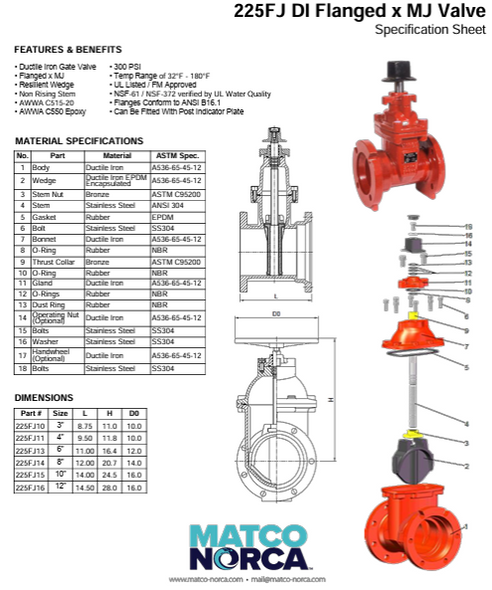
| Product Type | Resilient Seated Gate Valve |
|---|---|
| Brand | Midland |
| Body Material | Ductile Iron |
| Connection Type | IPS x IPS Threaded |
| Stem Design | Non-Rising Stem (NRS) |
| Closure Type | Resilient Seated Wedge |
| Operation | Multi-Turn Gate Valve |
| Available Sizes | 2", 3", 4", and 6" |
| Primary Function | On/Off Flow Isolation |
| Typical Service | Water Distribution and Compatible Water Systems |
| Installation | Aboveground or Underground |
| Exterior Protection | Corrosion-Resistant Coating |
Valve Configuration
IPS Threaded Inlet
One IPS threaded connection attaches to a compatible threaded piping component without requiring a flanged connection.
Resilient Wedge Body
The internal resilient seated wedge moves through the valve body to provide full-open flow or dependable shutoff.
IPS Threaded Outlet
The opposite threaded connection continues the piping run into a compatible IPS threaded system.
Construction Details
The Midland gate valve uses a heavy-duty ductile iron body designed to provide strength and durability in demanding water distribution applications.
A resilient seated wedge provides dependable sealing performance, while the non-rising stem keeps vertical movement contained within the valve body during operation.
IPS threaded end connections allow the valve to be installed directly into compatible threaded piping systems without the added space or hardware associated with flanged joints.
Why Choose a Resilient Seated Gate Valve?
Reliable Shutoff
- Resilient seated wedge
- Designed for positive isolation
- Suitable for water distribution service
- Multi-turn control
- Durable internal sealing design
Heavy-Duty Construction
- Ductile iron body
- Corrosion-resistant coating
- Suitable for demanding environments
- Designed for long service life
- Available in larger threaded sizes
Non-Rising Stem Design
Compact Operation
The non-rising stem remains within the valve assembly as the valve is opened and closed, reducing the vertical clearance required for operation.
Underground Compatibility
The compact stem arrangement makes the design useful for installations where above-valve clearance is limited or the valve is located below grade.
Multi-Turn Gate Operation
Open Position
Rotating the valve operator raises the resilient wedge from the flow path until the valve reaches the fully open position.
Closed Position
Rotating the operator in the closing direction lowers the wedge into the flow path to isolate the connected piping system.
IPS x IPS Threaded Connections
Threaded Installation
IPS threaded ends provide direct connection to compatible threaded piping without requiring separate flange assemblies.
Compact Piping Layout
The threaded connection style can simplify installations where space is limited or flanged connections are not required.
Typical Applications
Water Distribution
- Water mains
- Building water systems
- Utility piping
- Service isolation points
- Distribution piping
Industrial & Underground Service
- Industrial water systems
- Underground piping
- Aboveground mechanical piping
- Plant utility systems
- Compatible water service applications
Non-Rising Stem vs. Rising Stem Gate Valve
Non-Rising Stem
A non-rising stem remains within the valve assembly during operation, allowing a more compact installation with reduced vertical clearance requirements.
Rising Stem
A rising stem moves vertically as the valve opens and closes, providing a visible indication of gate position but requiring additional operating clearance.
Gate Valve vs. Ball Valve
Gate Valve
A gate valve uses multi-turn operation to raise or lower a wedge and is primarily designed for full-open or full-closed isolation service.
Ball Valve
A ball valve typically uses quarter-turn operation for faster shutoff and may be preferred where rapid opening and closing are required.

Our valve, fitting, and industrial product specialists can help review your valve size, FIP connection requirements, pressure rating, handle configuration, media compatibility, and application before you order.
Email the GetPipe.com Team Visit Quick SupportFrequently Asked Questions
What does IPS x IPS mean?
IPS x IPS indicates compatible iron pipe size threaded connections on both ends of the valve.
What sizes are available?
The supplied product information lists 2", 3", 4", and 6" sizes.
What material is the valve body made from?
The supplied product information identifies heavy-duty ductile iron construction.
What is a resilient seated gate valve?
A resilient seated gate valve uses a flexible sealing surface on the wedge to provide dependable shutoff against the valve seat.
What does NRS mean?
NRS means non-rising stem. The stem does not extend upward as the valve is opened, helping reduce required operating clearance.
Can this valve be installed underground?
The supplied product information identifies both aboveground and underground water applications as intended uses.
What media is this valve designed for?
The supplied product information identifies water distribution service. Confirm compatibility with the specific system media before installation.
Is the valve intended for throttling?
Gate valves are generally intended for fully open or fully closed service rather than routine flow throttling.
Why use a non-rising stem valve?
A non-rising stem design reduces the vertical operating clearance required and can be useful in underground or confined installations.
Should thread sealant be used?
Use an appropriate thread sealant on compatible threaded connections where permitted by the application and manufacturer recommendations.
What should I verify before ordering?
Confirm nominal valve size, IPS thread compatibility, operating pressure, temperature requirements, installation location, valve operator requirements, and media compatibility before ordering.
Important Ordering & Installation Notes
- This listing is for a Midland Ductile Iron Gate Valve with IPS x IPS threaded connections.
- Available sizes are listed as 2", 3", 4", and 6".
- Confirm the required nominal valve size before ordering.
- Verify compatibility between the IPS valve threads and mating piping components.
- Confirm the intended operating method and required access before installation.
- Verify system pressure and operating temperature requirements.
- Confirm ductile iron, resilient seat, coating, and internal component compatibility with the intended media.
- Use an appropriate thread sealant where permitted by the system specification.
- Avoid excessive installation torque that could damage threaded connections or the valve body.
- Support connected piping to avoid placing excessive mechanical load on the valve.
- Gate valves should generally be operated fully open or fully closed rather than used for routine throttling.
- For underground installations, maintain proper valve access for future operation and maintenance.
- Confirm proper orientation and operating clearance before placing the system into service.
- Install according to applicable piping standards, project requirements, and manufacturer recommendations.