

Midland Industries
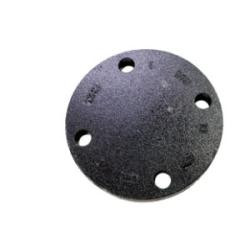
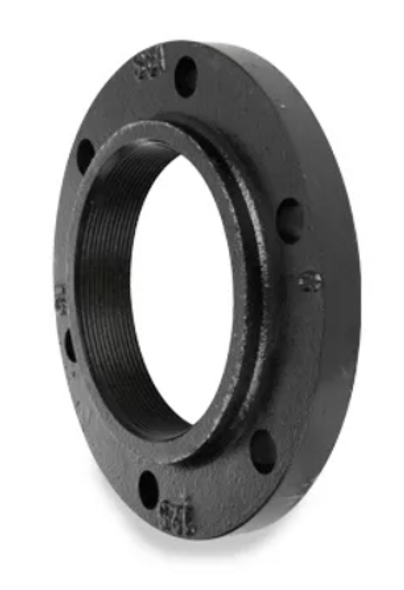
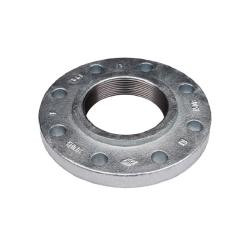
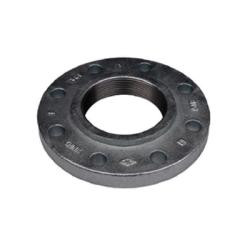
Midland 150# Threaded Black Ductile Iron Flange
- Availability:
- Allow 2-3 Days to Ship
- Weight:
- 0.00 LBS



Description
Midland 150# Threaded Black Ductile Iron Flange
Midland Class 150 Threaded Black Ductile Iron Flanges provide a durable threaded connection for compatible piping systems where welding is not practical or desired.
Manufactured from heavy-duty ductile iron, these flanges feature female NPT threads, a raised face sealing surface, and standard Class 150 bolt patterns. Available in sizes from 1" through 6", they are suited for commercial, industrial, mechanical, and general service piping applications.
Product Highlights
- Midland Class 150 threaded flange
- Heavy-duty ductile iron construction
- Black finish
- Female NPT threaded connection
- Raised face sealing surface
- Manufactured to ANSI/ASME B16.5 dimensions
- Compatible with standard Class 150 bolt patterns
- Provides a threaded alternative to welded flange connections
- Available in sizes from 1" through 6"
- Suitable for commercial and industrial piping systems
Technical Specifications
| Product Type | Threaded Flange |
|---|---|
| Brand | Midland |
| Material | Ductile Iron |
| Finish | Black |
| Pressure Class | Class 150 |
| Thread Type | Female NPT |
| Flange Face | Raised Face |
| Dimensional Standard | ANSI/ASME B16.5 |
| Bolt Pattern | Standard Class 150 |
| Available Sizes | 1" Through 6" |
| Primary Function | Threaded Pipe-to-Flange Connection |
| Typical Applications | Commercial, Industrial, Mechanical, and General Service Piping |
Flange Configuration
Female NPT Connection
The center opening is internally threaded to accept compatible male NPT pipe without requiring a welded connection.
Raised Face
The raised sealing surface helps concentrate gasket compression around the pipe opening for dependable flange sealing.
Class 150 Bolt Pattern
Pre-drilled bolt holes provide compatibility with corresponding Class 150 mating flanges and bolting arrangements.
Construction Details
The flange is manufactured from durable ductile iron for excellent mechanical strength and dependable service in demanding piping systems.
Precision-machined female NPT threads provide a secure threaded connection while eliminating the need for welding during installation.
The raised face design supports proper gasket compression when paired with compatible mating flanges, while the black finish provides a standard industrial appearance.
Why Choose a Threaded Flange?
No Welding Required
- Connects directly to threaded pipe
- Useful where welding is impractical
- Simplifies field installation
- Allows easier replacement or modification
- Reduces hot-work requirements
Standard Flange Compatibility
- Class 150 bolt pattern
- Raised face sealing surface
- Compatible with suitable mating flanges
- Allows gasketed bolted assembly
- Useful for valves and equipment connections
Ductile Iron Construction
Mechanical Strength
Ductile iron provides strong mechanical properties and improved toughness for demanding piping applications.
Long Service Life
The rugged flange body is designed for dependable performance in compatible commercial and industrial piping systems.
Raised Face Design
Focused Gasket Compression
The raised face concentrates gasket loading around the sealing area to help create a dependable flange joint.
Mating Flange Compatibility
Use with a compatible flange face and properly selected gasket to achieve reliable sealing performance.
Typical Applications
Commercial & Mechanical Systems
- Building utility piping
- Mechanical room systems
- General plumbing systems
- Pump connections
- Equipment connections
Industrial Systems
- Industrial utility piping
- Plant piping
- Flanged valve installations
- General service piping
- Threaded piping transitions
Threaded Flange vs. Weld Flange
Threaded Flange
A threaded flange connects directly to male-threaded pipe and normally does not require welding during installation.
Weld Flange
A weld flange is permanently joined to pipe by welding and may be preferred where a welded connection is required by the piping specification.

Our valve, fitting, and industrial product specialists can help review your valve size, FIP connection requirements, pressure rating, handle configuration, media compatibility, and application before you order.
Email the GetPipe.com Team Visit Quick SupportFrequently Asked Questions
What type of flange is this?
This is a Class 150 threaded black ductile iron flange with a female NPT connection.
What material is the flange made from?
The supplied product information identifies heavy-duty ductile iron construction.
What pressure class is this flange?
The supplied product information identifies it as Class 150.
What type of thread does it use?
The flange uses a female NPT threaded connection.
What flange face does it use?
The supplied product information identifies a raised face sealing surface.
What dimensional standard does it follow?
The supplied product information identifies ANSI/ASME B16.5 dimensions.
What sizes are available?
The supplied product information identifies sizes from 1" through 6".
Does installation require welding?
No. The female NPT connection allows installation onto compatible threaded pipe without welding.
Is a gasket required?
Yes. Use a gasket compatible with the mating flange faces, system media, pressure, and temperature.
What should I verify before ordering?
Confirm nominal flange size, female NPT thread size, Class 150 bolt pattern, raised face compatibility, system pressure, temperature, and material suitability before ordering.
Important Ordering & Installation Notes
- This listing is for Midland Class 150 Threaded Black Ductile Iron Flanges.
- Available sizes range from 1" through 6".
- Confirm the required nominal flange and pipe thread size before ordering.
- Verify ANSI/ASME B16.5 dimensional compatibility.
- Confirm standard Class 150 bolt-pattern compatibility with the mating flange.
- Verify raised face compatibility with the intended flange assembly.
- Use an appropriate NPT thread sealant or PTFE tape where permitted.
- Avoid excessive thread tightening that could damage the flange or connected pipe.
- Select a gasket suitable for the media, pressure, temperature, and flange faces.
- Ensure mating flange surfaces are clean and properly aligned before assembly.
- Tighten flange bolts using an appropriate cross-pattern sequence.
- Do not use flange hardware to pull severely misaligned piping into position.
- Verify system pressure and temperature requirements before placing the connection into service.
- Install according to applicable piping standards, project requirements, and manufacturer recommendations.