

Service Metal
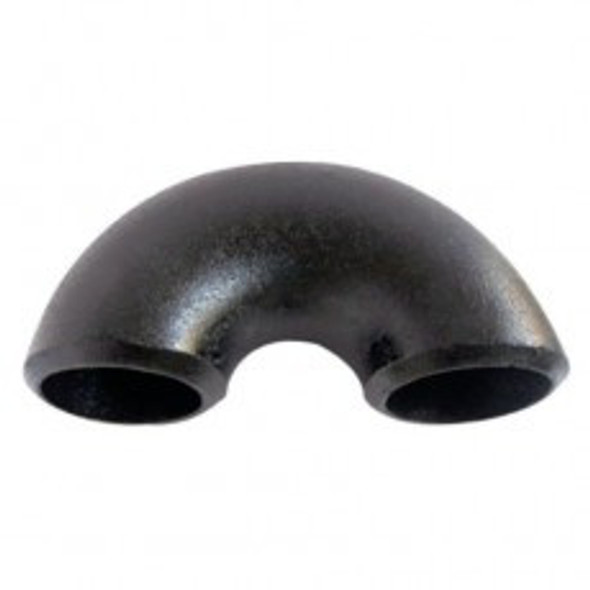
Carbon Steel Weld 180° Return Bend Long Radius

- SKU:
- SLRB
- Availability:
- Usually Ships Same Day
- Weight:
- 0.00 LBS



Description
Carbon Steel Weld 180° Return Bend Long Radius
Carbon Steel Weld 180° Long Radius Return Bends are designed to reverse the direction of a piping system through a smooth 180-degree flow path while providing a more gradual turn than a short radius return bend.
Manufactured from durable carbon steel, these butt weld return bends provide a permanent welded connection for industrial, commercial, mechanical, and process piping applications. Available in Standard, Schedule 160, Extra Heavy, and Double Extra Heavy options, they are ideal for systems requiring strength, weldability, and efficient directional flow.
Product Highlights
- Carbon steel 180° long radius return bend
- Reverses piping direction by 180°
- Long radius configuration provides a more gradual directional change
- Designed to support smoother flow through the return
- Provides a permanent butt weld connection
- Available in Standard, Schedule 160, Extra Heavy, and Double Extra Heavy options
- Seamless butt weld fittings conform to ASTM A/SA234 WPB through 24"
- Weld fitting dimensions conform to ASME/ANSI B16.9, B16.11, and B16.28 through 24"
- Weld fitting dimensions larger than 24" conform to MSS-SP-48
- Carbon content not to exceed 0.25% maximum
- Manufacturing facilities are ISO certified
- Mill Test Reports available with every order
Technical Specifications
| Product Type | 180° Return Bend |
|---|---|
| Material | Carbon Steel |
| Connection Type | Butt Weld |
| Bend Angle | 180° |
| Radius Type | Long Radius |
| Primary Function | Reverse Piping Direction |
| Available Wall Options | Standard, Schedule 160, Extra Heavy, Double Extra Heavy |
| Material Specification | ASTM A/SA234 WPB through 24" |
| Dimensional Standards | ASME/ANSI B16.9, B16.11, and B16.28 through 24" |
| Dimensions Over 24" | MSS-SP-48 |
| Maximum Carbon Content | 0.25% |
| Manufacturing | ISO-Certified Facilities |
| Material Documentation | Mill Test Reports Available with Every Order |
Return Bend Configuration
180° Direction Change
The return bend redirects the piping system back in the opposite direction through a complete 180-degree turn.
Long Radius Design
The long radius configuration provides a broader and more gradual bend than a short radius return bend.
Two Butt Weld Ends
Both ends are designed to weld directly to compatible carbon steel pipe or piping components.
Construction Details
Carbon steel weld long radius return bends are designed for installation between compatible butt weld pipe and piping components. Welding both ends into the system creates a permanent directional connection without threaded or mechanical joints.
The long radius profile provides a smoother 180-degree path than a short radius configuration, making it useful where additional installation space is available and a more gradual directional transition is preferred.
Why Choose a Long Radius Return Bend?
Smoother Directional Reversal
- Reverses pipe direction by 180°
- Long radius profile provides a more gradual bend
- Supports smoother directional flow
- Useful for parallel piping runs
- Can simplify return piping layouts
Permanent Welded Connection
- Designed for compatible butt weld piping
- No threaded connection required
- Suitable for industrial and mechanical piping systems
- Available in multiple wall thickness options
- Supports fabricated piping assemblies
Long Radius vs. Short Radius Return Bends
Long Radius
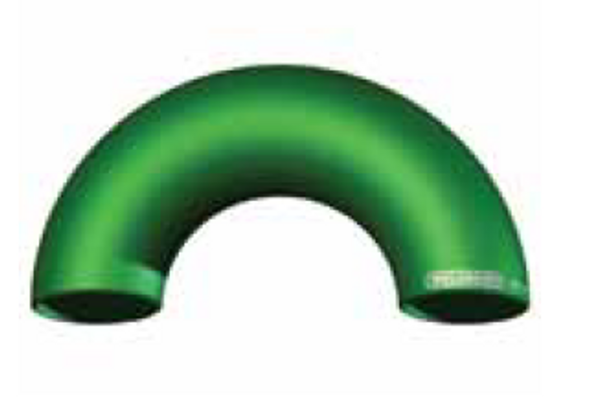
A long radius return bend uses a broader bend profile to create a more gradual 180-degree directional change. It generally requires more installation space than a short radius return bend.
Short Radius
A short radius return bend uses a tighter profile to reverse piping direction within a more compact footprint where space is limited.
Typical Applications
Industrial & Mechanical Piping
- Industrial process piping
- Mechanical piping systems
- Plant utility piping
- Equipment piping
- Fabricated piping assemblies
Return & Parallel Piping
- Parallel pipe runs
- Return piping systems
- Heat exchanger piping layouts
- Commercial mechanical systems
- General carbon steel piping systems
Wall Thickness Options
Standard & Extra Heavy
Standard and Extra Heavy return bends are available for compatible piping systems requiring conventional or heavier-duty wall construction.
Schedule 160 & Double Extra Heavy
Schedule 160 and Double Extra Heavy options are available for compatible applications requiring substantially heavier wall construction.

Ask Willy: Need Pipe Size Help?
Use our common pipe diameters and wall thickness chart to confirm sizing and wall thickness before ordering carbon steel weld return bends. You can also review the weld return bend dimensional sheet below.
Standards & Documentation
ASTM Material Standard
Seamless butt weld fittings conform to ASTM A/SA234 WPB through 24".
Dimensional Standards
Weld fitting dimensions conform to ASME/ANSI B16.9, B16.11, and B16.28 through 24". Dimensions larger than 24" conform to MSS-SP-48.
Material Traceability
Mill Test Reports are available with every order, providing supporting material documentation for applicable project requirements.
Need More Carbon Steel Weld Fittings?
Browse our complete selection of carbon steel weld fittings, including return bends, elbows, tees, laterals, reducers, caps, and other butt weld fittings.
Frequently Asked Questions
What is a 180-degree long radius return bend?
A 180° long radius return bend is a butt weld fitting designed to reverse the direction of a piping system through a broad, gradual bend.
What does long radius mean?
Long radius refers to a broader bend configuration that provides a more gradual directional transition than a short radius return bend.
How is a long radius return bend different from a short radius return bend?
A long radius return bend uses a broader curve and requires more installation space, while a short radius return bend provides a tighter and more compact 180-degree turn.
When would I use a return bend instead of two elbows?
A return bend provides the full 180-degree directional change in one fitting, which can simplify layouts connecting parallel pipe runs.
What type of connection does this fitting use?
This fitting uses butt weld connections and is welded to compatible carbon steel pipe or piping components.
What wall thickness options are available?
The supplied product information lists Standard, Schedule 160, Extra Heavy, and Double Extra Heavy options.
What material specification applies?
Seamless butt weld fittings conform to ASTM A/SA234 WPB through 24".
What dimensional standards apply?
The supplied information states that weld fitting dimensions conform to ASME/ANSI B16.9, B16.11, and B16.28 through 24", with fittings larger than 24" conforming to MSS-SP-48.
Are Mill Test Reports available?
Yes. Mill Test Reports are available with every order according to the supplied product information.
What should I verify before ordering?
Confirm the nominal pipe size, long radius configuration, required wall thickness, material requirements, available installation space, and applicable piping-system specifications before ordering.
Important Ordering & Installation Notes
- Confirm the required nominal pipe size before ordering.
- Confirm that a long radius 180° return bend is appropriate for the intended piping layout.
- Confirm the required wall thickness: Standard, Schedule 160, Extra Heavy, or Double Extra Heavy.
- This fitting uses butt weld connections.
- Allow sufficient installation space for the long radius bend profile.
- Verify carbon steel compatibility with the intended piping service.
- Confirm applicable pressure, temperature, dimensional, and project requirements.
- Use qualified welding procedures and personnel as required by the applicable piping code or project specification.
- Inspect fitting ends and adjoining pipe before fit-up and welding.
- Confirm proper alignment and spacing between parallel pipe runs before welding.
- Mill Test Reports are available with every order.
- Refer to the dimensional PDF for fitting-specific measurements before fabrication.