

ASC
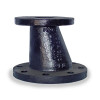
150 lb. Ductile Iron Flanged Eccentric Reducer

- SKU:
- 38ER1
- Availability:
- Usually Ships Same Day
- Weight:
- 0.00 LBS




Description
150 lb. Ductile Iron Flanged Eccentric Reducer
ASC / SCI FIG 38ER1 150 lb. Ductile Iron Flanged Eccentric Reducer provides a transition between different flanged pipe sizes while maintaining an offset centerline through the reducer.
The eccentric configuration is useful where maintaining the position of one side of the piping run is important. FIG 38ER1 is manufactured for compatible Class 150 flanged piping systems, with galvanizing available upon request.
Product Highlights
- ASC / SCI FIG 38ER1
- Class 150 ductile iron fitting
- Eccentric reducing configuration
- Flanged end connections
- Offset pipe-size transition
- Galvanizing available upon request
Technical Specifications
| Product Type | Flanged Eccentric Reducer |
|---|---|
| Brand | ASC / SCI |
| Figure | 38ER1 |
| Fitting Class | Class 150 |
| Configuration | Eccentric Reducer |
| Connection Type | Flanged x Flanged |
| Material | Ductile Iron |
| Function | Transition Between Different Pipe Sizes |
| Centerline | Offset / Eccentric |
| Applicable Standards | ANSI/AWWA C110/A21.10 |
| Optional Finish | Galvanizing Available Upon Request |
Construction Details
FIG 38ER1 uses a ductile iron eccentric reducer body with flanged connections at both ends for installation between different nominal pipe sizes.
Unlike a concentric reducer, the eccentric design transitions between sizes with an offset centerline. This configuration can help maintain the elevation of one side of the piping run.
The flanged ends provide serviceable bolted connections to compatible piping components. ASC / SCI also offers galvanizing upon request for applications requiring an alternate protective finish.
Design & Typical Applications
Eccentric Reducer Design
- Offset reducing profile
- Two different flange sizes
- Flanged end connections
- Ductile iron construction
- Serviceable bolted joints
Typical Applications
- Pump piping systems
- Water distribution systems
- Industrial process piping
- Mechanical equipment piping
- Compatible utility systems
Installation & Selection Considerations
- Confirm both flange sizes.
- Verify reducer orientation.
- Use compatible flange gaskets.
- Align mating flanges properly.
- Confirm system service requirements.

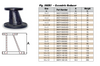
Use the supplied flange specifications and SCI Ductile Iron Flanged Fittings catalog to review flange information, FIG 38ER1 product details, reducer configurations, and selection information.
Need Help Selecting a Ductile Iron Flanged Eccentric Reducer?
Need help confirming inlet and outlet sizes, eccentric orientation, flange compatibility, gasket selection, or the correct reducer for your piping system? The GetPipe.com Team can help.
Frequently Asked Questions
What is the figure number for this eccentric reducer?
The ASC / SCI 150 lb. Ductile Iron Flanged Eccentric Reducer is FIG 38ER1.
What does an eccentric reducer do?
It transitions between two different pipe sizes while keeping the reducer centerlines offset rather than concentric.
What connections does FIG 38ER1 use?
FIG 38ER1 uses flanged connections on both ends for installation between compatible flanged piping components.
What is the difference between an eccentric and concentric reducer?
An eccentric reducer has an offset profile, while a concentric reducer transitions symmetrically around a common centerline.
Where are eccentric reducers commonly used?
They are commonly selected for pump piping, water systems, industrial piping, and other installations where reducer orientation or pipe elevation is important.
Why is reducer orientation important?
The eccentric profile has a specific offset direction, so its installed orientation should match the piping layout and equipment requirements.
Can FIG 38ER1 be galvanized?
Yes. ASC / SCI identifies galvanizing as available upon request.
What should I confirm before ordering?
Confirm both flange sizes, eccentric orientation, mating flange compatibility, gasket requirements, and intended system service.
Important Ordering & Installation Notes
- Confirm both flange sizes.
- Verify eccentric orientation.
- Use compatible flange gaskets.
- Support adjoining piping properly.
- Confirm intended system service.