



Description
Schedule 80 PVC Plug (Spigot)
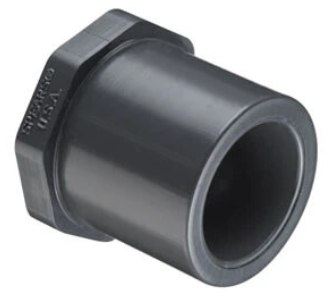
Schedule 80 PVC Plug (Spigot) provides a compact closure for a compatible Schedule 80 PVC socket connection. The spigot-style connection is designed to fit into an appropriately sized receiving socket, allowing an unused or terminating connection point to be closed within the PVC piping arrangement.
The spigot plug configuration combines a closed fitting body with an exterior spigot connection intended for compatible socket joining. Selection should account for nominal size, Schedule 80 PVC compatibility, receiving socket size, required closure location, joining materials, connection alignment, surrounding clearance, and the requirements of the complete piping system.
Product Highlights
- PVC construction
- Spigot connection
- Schedule 80 design
- Compact plug configuration
- Provides a closed-end connection
- Fits into a compatible receiving socket
- Terminates an unused compatible socket opening
- Provides a solvent-cement closure for Schedule 80 PVC piping
Technical Specifications
| Product Type | Plug |
|---|---|
| Material | PVC |
| Schedule | Schedule 80 |
| Connection | Spigot (SPG) |
| Connection Count | One |
| Fitting Configuration | Closed-End Plug |
| Spigot Interface | Compatible Receiving Socket |
| Connection Style | Spigot |
| Joining Method | Compatible PVC Solvent-Cement Joining |
| Installation Position | Compatible Socket Opening |
| Flow Configuration | Closed End |
| Primary Function | Close a Compatible Schedule 80 PVC Socket Connection |
Spigot Plug Design
The spigot plug configuration provides a closed fitting body with an exterior connection designed to enter a compatible receiving socket. Rather than extending the piping run, the plug occupies the socket opening and creates a termination point within the Schedule 80 PVC piping arrangement.
The plug should be matched to the intended receiving socket before permanent installation so the spigot interface corresponds with the connection being closed. Planning the closure location in advance also helps provide suitable access for surface preparation, insertion, joining, and surrounding piping components.
Spigot Connection
The spigot connection provides an exterior joining surface that fits into an appropriately sized compatible socket. This connection arrangement allows the plug to install directly into a receiving socket rather than over the outside of a pipe end like a conventional socket-style cap.
The spigot and receiving socket surfaces should be prepared using installation practices appropriate for the PVC piping system. Compatible joining materials, adequate insertion, proper alignment, and correct assembly procedures help establish the intended closure while limiting unnecessary mechanical stress on the completed connection.
Schedule 80 PVC Integration
The Schedule 80 PVC construction allows the plug to integrate into compatible Schedule 80 PVC piping arrangements where a socket opening needs to be permanently terminated. Matching the nominal size and spigot configuration to the receiving socket helps maintain the intended connection arrangement at the closure point.
Application suitability should be evaluated using the requirements of the complete piping system rather than the schedule designation alone. Intended service conditions, adjoining materials, socket compatibility, joining materials, installation environment, piping support, and applicable practices should all be considered during plug selection.
Socket Opening Closure
A Schedule 80 PVC Spigot Plug provides a direct way to close a compatible receiving socket without adding another length of pipe or a threaded transition. Its single spigot interface makes the fitting useful where the planned piping arrangement requires a compact closed end at an available socket connection.
Installation planning should consider insertion depth, socket access, nearby fittings, available working space, and support for adjoining piping or components. The plug should enter the receiving socket in proper alignment so the connection is not forced into position or subjected to unnecessary external loading during assembly.
Installation & Selection Considerations
- Confirm the nominal size.
- Verify the required closure.
- Check Schedule 80 PVC compatibility.
- Match the spigot to the receiving socket.
- Allow clearance around the connection point.

Our PVC fitting specialists can help review your nominal size, Schedule 80 requirements, spigot configuration, receiving socket, intended closure point, joining requirements, connection alignment, adjoining piping arrangement, and available installation clearance before you order.
Frequently Asked Questions
What is a Schedule 80 PVC Spigot Plug used for?
It provides a closed end by fitting into an appropriately sized compatible socket within a Schedule 80 PVC piping arrangement.
What does spigot mean on this plug?
Spigot identifies the exterior connection surface designed to fit into an appropriately sized compatible receiving socket.
What does the spigot end connect to?
The spigot connection fits into an appropriately sized compatible socket connection.
How many connections does this plug have?
The plug has one spigot connection because its purpose is to close rather than continue the piping path.
Is a spigot plug the same as a socket cap?
No. A spigot plug fits into a compatible receiving socket, while a socket-style cap receives a compatible pipe end.
Does this plug use a threaded connection?
No. This configuration is identified with a spigot connection rather than a male or female threaded connection.
How is the spigot connection assembled?
The spigot and compatible receiving socket are assembled using the appropriate PVC solvent-cement preparation and joining procedure.
What should I confirm before ordering?
Confirm the nominal size, Schedule 80 PVC requirement, spigot configuration, receiving socket compatibility, intended closure point, and installation clearance.
Important Ordering & Installation Notes
- Inspect the spigot before use.
- Clean the receiving socket thoroughly.
- Check insertion before final cementing.
- Use compatible PVC joining materials.
- Support adjoining components after final assembly.