





Description
Schedule 80 PVC Blind Flange 150 PSI
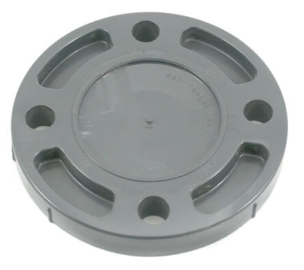
Schedule 80 PVC Blind Flange 150 PSI provides a bolted closure for the end of a compatible flanged piping connection. Its solid blind-flange configuration has no center flow opening, allowing the flange to close a mating connection while maintaining a removable mechanical joint for applications requiring access to the terminated piping location.
The 150 PSI blind flange configuration combines Schedule 80 PVC construction with a solid flange face designed for compatible bolted flange assemblies. Selection should account for nominal flange size, 150 PSI rating, mating flange compatibility, gasket requirements, bolt-hole alignment, service conditions, adjoining piping support, and available installation clearance.
Product Highlights
- PVC construction
- 150 PSI rating
- Schedule 80 design
- Solid blind flange design
- Provides a removable end closure
- Uses a compatible bolted flange connection
- Closes the end of a compatible flanged piping run
- Provides serviceable access at a terminated Schedule 80 PVC flange connection
Technical Specifications
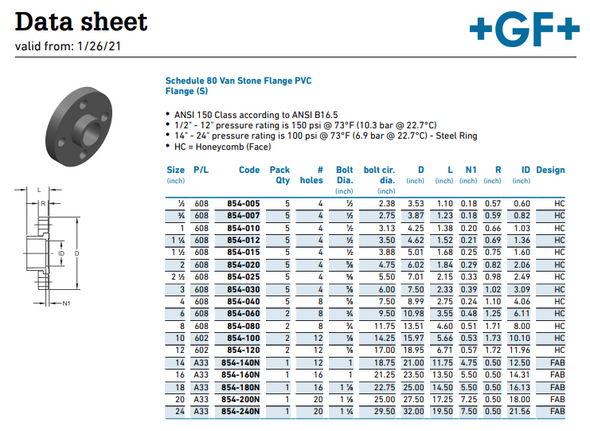
| Product Type | Blind Flange |
|---|---|
| Material | PVC |
| Schedule | Schedule 80 |
| Pressure Rating | 150 PSI |
| Flange Style | Blind |
| Center Opening | None |
| Fitting Configuration | Solid Flange Closure |
| Connection Interface | Compatible Mating Flange |
| Connection Style | Bolted Flange |
| Joining Method | Bolted Mechanical Connection |
| Piping Position | Flanged Termination Point |
| Primary Function | Close a Compatible Schedule 80 PVC Flanged Connection |
Blind Flange Design
The blind flange configuration uses a solid face without a center flow opening, allowing the fitting to terminate a compatible flanged connection. Rather than continuing the piping path, the blind flange closes the opening while retaining the familiar bolted flange arrangement at the end of the piping system.
This configuration can provide convenient access where a terminated flange connection may need to be opened during future system servicing or modification. The blind flange can be separated from the mating flange by disassembling the bolted joint, provided the piping system has first been properly isolated and placed in a safe service condition.
150 PSI Configuration
The 150 PSI rating identifies the stated pressure rating for this Schedule 80 PVC blind flange. The rating should be considered together with the requirements and limitations of the complete piping assembly, since overall system suitability depends on the ratings and compatibility of all connected components.
Operating conditions should be reviewed before installation to ensure the selected flange is appropriate for the intended service. Temperature, fluid compatibility, mating components, gasket selection, installation practices, and other system conditions can affect the suitability of a completed PVC flange assembly.
Bolted Flange Connection
The bolted flange interface allows the blind flange to mate with a compatible flange using the appropriate gasket and fasteners. Proper flange-face alignment helps the gasket remain correctly positioned while allowing the fasteners to be installed without using them to pull misaligned piping or components together.
Fasteners should be tightened progressively and evenly using the appropriate installation sequence for the flange assembly. Controlled tightening helps distribute compression around the gasket and flange face while reducing concentrated loading that could result from uneven assembly or improperly supported adjoining piping.
Flanged Piping Closure
A Schedule 80 PVC Blind Flange provides a practical closure where a compatible flanged piping run, fitting, valve, or equipment connection needs to terminate. The solid flange face blocks the connection while the mechanical joint provides an alternative to permanently closing the piping with a solvent-cemented cap or plug.
Installation planning should consider mating flange alignment, gasket placement, fastener access, surrounding components, and independent support for the adjoining piping. The mating flange should approach the blind flange naturally so the completed joint is not subjected to unnecessary bending, twisting, or alignment forces.
Installation & Selection Considerations
- Confirm the nominal size.
- Verify the 150 PSI rating.
- Check mating flange compatibility.
- Review the intended service conditions.
- Allow clearance for bolts and flange assembly.

Our PVC fitting specialists can help review your nominal flange size, Schedule 80 requirements, 150 PSI rating, mating flange configuration, gasket requirements, bolt alignment, intended service conditions, adjoining piping support, and available assembly clearance before you order.
Frequently Asked Questions
What is a Schedule 80 PVC Blind Flange used for?
It provides a solid bolted closure at the end of a compatible flanged piping connection.
Does a blind flange have a center opening?
No. A blind flange uses a solid face without a center flow opening so it can close the mating flange connection.
What does the 150 PSI designation mean?
It identifies the stated 150 PSI pressure rating for this blind flange and should be considered with the requirements of the complete piping system.
How does the blind flange connect?
It mates with a compatible flange using an appropriate gasket and bolted mechanical connection.
Can the blind flange be removed later?
Yes. The bolted connection can be disassembled for appropriate servicing after the piping system has been safely isolated and depressurized.
Why is gasket alignment important?
Proper gasket positioning helps establish uniform sealing between the mating flange faces when the fasteners are tightened.
Should the adjoining piping be independently supported?
Yes. Proper support helps prevent unnecessary external loads from being transferred into the blind flange and bolted joint.
What should I confirm before ordering?
Confirm the nominal size, Schedule 80 PVC requirement, 150 PSI rating, mating flange compatibility, gasket requirements, service conditions, and installation clearance.
Important Ordering & Installation Notes
- Inspect the flange face before use.
- Center the gasket before bolting.
- Align mating flange faces before assembly.
- Tighten flange fasteners evenly in sequence.
- Support adjoining piping independently of the flange.