

ASC
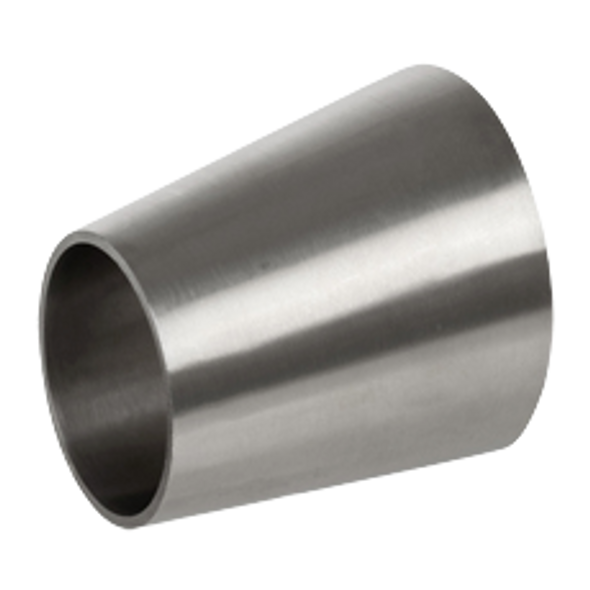
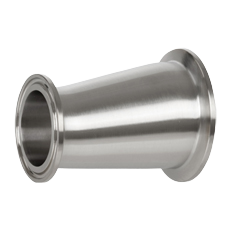
Sanitary Clamp End Eccentric Reducer
- SKU:
- S773214MP4 & S773214MP6
- Availability:
- Usually Ships Same Day
- Weight:
- 0.00 LBS




Description
Sanitary Clamp End Eccentric Reducer
ASC / SCI Fig. S773214MP4 & S773214MP6 Sanitary Clamp End Eccentric Reducers provide a sanitary transition between different tube diameters while maintaining an offset flow path.
Available in 304 stainless steel and 316/L stainless steel, these clamp-end reducers are designed for sanitary and hygienic process piping systems and are produced to applicable 3-A Sanitary Standards.
Product Highlights
- ASC / SCI sanitary fitting
- Fig. S773214MP4 & S773214MP6
- Eccentric reducing configuration
- Sanitary clamp-end connections
- 304 or 316/L stainless steel
- For hygienic process piping
Technical Specifications
| Product Type | Sanitary Clamp End Eccentric Reducer |
|---|---|
| Brand | ASC / SCI |
| Figures | S773214MP4 / S773214MP6 |
| S773214MP4 Material | 304 Stainless Steel |
| S773214MP6 Material | 316/L Stainless Steel |
| Connection Style | Sanitary Clamp End x Clamp End |
| Reducer Style | Eccentric |
| Sanitary Standard | Produced to Applicable 3-A Sanitary Standards |
| Tubing Reference | ASTM A269 / A270 |
Construction Details
The SCI Sanitary Clamp End Eccentric Reducer is offered as Fig. S773214MP4 in 304 stainless steel and Fig. S773214MP6 in 316/L stainless steel.
The eccentric configuration transitions between different sanitary tube diameters while keeping one side of the flow path offset rather than centered like a concentric reducer.
SCI sanitary tubing and fittings are produced to applicable 3-A Sanitary Standards, with stainless steel sanitary tubing dimensions and materials conforming to ASTM A269/A270.
Reducer Design & Applications
Eccentric Design
- Offset reducing configuration
- Clamp end x clamp end
- Sanitary tube transition
- 304 or 316/L stainless
- Hygienic piping design
Typical Applications
- Food processing systems
- Beverage process piping
- Dairy processing systems
- Pharmaceutical piping
- Hygienic process systems
Installation & Selection Considerations
- Select 304 or 316/L stainless steel.
- Confirm both sanitary tube connections.
- Verify the required eccentric orientation.
- Use compatible clamp components.
- Inspect the connection before service.

Use the SCI Sanitary Fittings & Tubing Catalog to confirm the S773214MP4 and S773214MP6 figures, stainless steel material options, sanitary clamp-end configuration, and product specifications.
Need Help Selecting a Sanitary Clamp End Eccentric Reducer?
Need help confirming stainless steel grade, clamp-end compatibility, reducer configuration, or the correct eccentric orientation for your piping system? The GetPipe.com Team can help.
Frequently Asked Questions
What is a sanitary clamp end eccentric reducer?
It is a sanitary fitting that transitions between different tube diameters using an offset, rather than centered, reducing profile.
What are the SCI figure numbers?
The SCI catalog identifies these reducers as Fig. S773214MP4 and S773214MP6.
What is the difference between S773214MP4 and S773214MP6?
S773214MP4 is the 304 stainless steel version, while S773214MP6 is the 316/L stainless steel version.
What type of connections does this reducer use?
It uses sanitary clamp-end connections for joining compatible sanitary tubing and clamp components.
How is an eccentric reducer different from a concentric reducer?
An eccentric reducer has an offset transition, while a concentric reducer transitions around a common centerline.
Are these fittings produced to 3-A standards?
SCI states that its sanitary tubing and fittings are produced to applicable 3-A Sanitary Standards.
Where are sanitary eccentric reducers commonly used?
Typical applications include food, beverage, dairy, pharmaceutical, and other hygienic process piping systems.
What should I confirm before ordering?
Confirm the stainless steel grade, inlet and outlet requirements, clamp compatibility, and required eccentric orientation.
Important Ordering & Installation Notes
- Confirm 304 or 316/L material.
- Verify both clamp-end connections.
- Confirm the required eccentric orientation.
- Use compatible sanitary clamp components.
- Inspect the assembled connection before service.