

Midland Industries
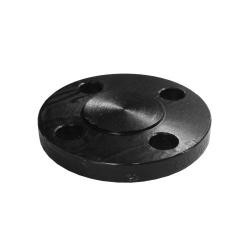
Midland 316 Stainless Steel Blind Flange

- Availability:
- Allow 2-3 Days to Ship
- Weight:
- 0.00 LBS




Description
Midland 316 Stainless Steel Blind Flange
Midland 316 Stainless Steel Raised Face Blind Flanges are designed to securely terminate compatible piping systems while maintaining a removable bolted connection for future inspection, maintenance, pressure testing, or system expansion.
Manufactured from Type 316 stainless steel, these blind flanges provide excellent corrosion resistance in demanding commercial and industrial environments. The raised face sealing surface supports dependable gasket compression when installed with a compatible mating flange and properly selected hardware.
Product Highlights
- Midland 316 stainless steel blind flange
- Type 316 stainless steel construction
- Raised Face (RF) sealing surface
- Solid blind design for piping system termination
- Precision-machined gasket seating surface
- Pre-drilled flange bolt holes
- Excellent corrosion resistance
- Suitable for harsh and chloride-containing environments
- Removable bolted closure for maintenance and future system access
- Suitable for compatible commercial and industrial piping systems
Technical Specifications
| Product Type | Blind Flange |
|---|---|
| Brand | Midland |
| Material | 316 Stainless Steel |
| Face Style | Raised Face (RF) |
| Center Opening | Solid / Non-Bored |
| Connection Method | Bolted Flange Connection |
| Primary Function | Piping System Termination and Isolation |
| Typical Applications | Industrial, Marine, Chemical, Pharmaceutical, Food Processing, and Compatible Commercial Piping Systems |
Flange Configuration
Solid Blind Face
The non-bored center completely closes the end of the piping system while maintaining a removable flange connection.
Raised Face
The raised sealing surface provides a defined gasket seating area for dependable bolted-joint sealing.
Pre-Drilled Bolt Holes
Precision-machined bolt holes allow alignment with compatible mating flanges and properly selected flange hardware.
Construction Details
The flange is manufactured from Type 316 stainless steel for durability and resistance to corrosion, pitting, and chloride exposure in compatible applications.
Its solid, non-bored design provides complete piping system closure while still allowing the flange to be removed later for maintenance, inspection, testing, or system modification.
The precision-machined raised face provides a consistent gasket seating surface to support uniform compression and reliable sealing when properly installed.
Why Choose 316 Stainless Steel?
Enhanced Corrosion Resistance
- Strong resistance to many corrosive environments
- Improved resistance to chloride exposure
- Suitable for many marine applications
- Useful in chemical and process environments
- Designed for long service life
Demanding Applications
- Industrial piping
- Marine systems
- Chemical processing
- Pharmaceutical applications
- Food processing systems
Why Use a Blind Flange?
Secure Line Termination
- Closes unused flange openings
- Provides a solid piping end closure
- Supports system isolation
- Useful for pressure testing
- Can remain installed as a permanent closure
Future Access
- Removable for inspection
- Allows future system expansion
- Provides maintenance access
- Useful for piping modifications
- Avoids permanent welded closure
Raised Face Design
Gasket Compression
The raised face concentrates gasket contact around the flange sealing area to help create a dependable leak-resistant joint.
Proper Gasket Selection
Select a gasket compatible with the mating flange, system pressure, operating temperature, and intended media.
Typical Applications
Industrial & Process Systems
- Chemical processing
- Industrial utility piping
- Process piping
- Equipment isolation
- System testing points
Corrosive & Specialty Environments
- Marine applications
- Pharmaceutical systems
- Food processing
- Corrosion-resistant piping systems
- Compatible sanitary and process support systems
Blind Flange vs. Threaded Cap
Blind Flange
A blind flange closes a flanged piping connection using bolts and a gasket, providing a removable closure for future access.
Threaded Cap
A threaded cap closes the end of threaded pipe or a threaded fitting and does not use a bolted flange connection.

Our valve, fitting, and industrial product specialists can help review your valve size, FIP connection requirements, pressure rating, handle configuration, media compatibility, and application before you order.
Email the GetPipe.com Team Visit Quick SupportFrequently Asked Questions
What material is this flange made from?
The supplied product information identifies Type 316 stainless steel construction.
What is a blind flange used for?
A blind flange is used to close the end of a flanged piping system while maintaining a removable bolted connection.
What does RF mean?
RF means raised face, referring to the elevated gasket sealing area on the flange face.
Does this flange have a center opening?
No. A blind flange uses a solid, non-bored center to completely close the piping connection.
Why use 316 stainless steel?
316 stainless steel provides excellent corrosion resistance, including improved resistance to many chloride-containing environments.
Can the flange be removed later?
Yes. Because it is installed using flange bolts and a gasket, it can be removed after the system has been safely isolated and depressurized.
Is a gasket required?
Yes. Use a gasket compatible with the raised face configuration, mating flange, media, pressure, and operating temperature.
What applications are these flanges suited for?
The supplied product information identifies industrial, marine, chemical, pharmaceutical, food processing, and commercial piping applications.
What should I verify before ordering?
Confirm flange size, pressure class, face style, mating flange dimensions, gasket requirements, system media, and operating conditions before ordering.
Important Ordering & Installation Notes
- This listing is for Midland 316 Stainless Steel Raised Face Blind Flanges.
- Confirm the required flange size before ordering.
- Verify the required pressure class and mating flange dimensions.
- Confirm raised face compatibility with the intended flange connection.
- Select a gasket compatible with the media, pressure, temperature, and flange faces.
- Use compatible bolts, nuts, and washers for the flange assembly.
- Verify 316 stainless steel compatibility with the intended media and environment.
- Ensure mating flange surfaces are clean and properly aligned before assembly.
- Tighten flange bolts using the recommended cross-pattern sequence.
- Apply appropriate bolt torque to achieve uniform gasket compression.
- Do not use flange bolts to pull severely misaligned piping into position.
- Fully isolate, depressurize, and drain the system before removing an installed blind flange.
- Do not exceed the specified pressure or temperature ratings of the piping system.
- Install according to applicable piping standards, project requirements, and manufacturer recommendations.