

Teadit
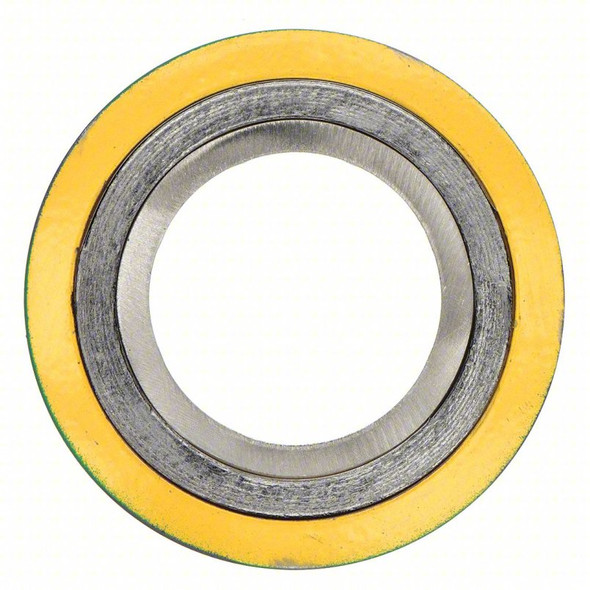
Class 300 CGI 304 SS / Graphite Spiral Wound Gasket

- SKU:
- GASFLEX30-CGI
- Availability:
- Usually in Stock – Ships Quickly
- Weight:
- 0.00 LBS





Description
Class 300 Style 913M 304 SS / Graphite Spiral Wound Gasket
Teadit Style 913M Class 300 spiral wound gaskets provide a high-performance sealing solution for demanding industrial flange connections. This configuration combines a 304 stainless steel winding, 304 stainless steel inner ring, flexible graphite filler, and carbon steel outer centering ring to provide strength, recovery, compression control, and dependable sealing performance.
Select the required nominal flange size from the product options above. Each selected variation determines the GetPipe.com SKU, online selling price, shipping weight, cost, and other size-specific product information.
- Manufacturer / Style: Teadit Style 913M
- Pressure Class: ASME Class 300
- Winding: 304 Stainless Steel
- Inner Ring: 304 Stainless Steel
- Filler: Flexible Graphite
- Outer Centering Ring: Carbon Steel
- Configuration: Spiral Wound Gasket with Inner & Outer Rings
- Design Standard: ASME B16.20
Product Highlights
- Teadit Style 913M spiral wound gasket configuration
- Designed for compatible ASME Class 300 flange systems
- 304 stainless steel metallic winding
- 304 stainless steel inner ring
- Flexible graphite sealing filler
- Carbon steel outer centering ring
- Alternating metal and soft sealing-material construction
- Inner ring provides additional compression limitation
- Inner ring helps reduce turbulence at the gasket bore
- Inner ring can provide added protection against corrosion or erosion at the bore
- Outer ring assists with gasket centering during installation
- Suitable for demanding industrial pressure and temperature applications when properly specified
- Available in nominal sizes from 1/2" through 12" on this product family
Technical Specifications
| Manufacturer | Teadit |
|---|---|
| Style | 913M |
| Product Type | Spiral Wound Flange Gasket with Inner & Outer Rings |
| Pressure Class | ASME Class 300 |
| Winding Material | 304 Stainless Steel |
| Filler Material | Flexible Graphite |
| Inner Ring Material | 304 Stainless Steel |
| Outer Ring Material | Carbon Steel |
| Gasket Standard | ASME B16.20 |
| Nominal Sizes | 1/2" Through 12" |
| Primary Applications | Industrial, Process, Refinery, Chemical, Steam, Mechanical and Utility Piping |
What Is a Teadit Style 913M Spiral Wound Gasket?
A spiral wound gasket is constructed from alternating layers of formed metallic winding and compressible sealing filler. The metallic winding provides mechanical strength, resilience, and recovery while the soft filler material conforms to the flange sealing surfaces to help create an effective seal.
Teadit's Style 913 uses a spiral wound sealing element with an outer centering ring. Style 913M adds an inner ring to the standard Style 913 configuration.
The inner ring provides additional support at the gasket bore and serves several important functions including compression limitation, reduction of turbulence in the process flow, and added protection against corrosion or erosion in the area between the flanges.
Understanding the 304 / 304 / FG / CS Construction
304 Stainless Steel Winding
The spiral wound sealing element uses 304 stainless steel as the metallic winding material. The formed winding provides structural strength and recovery while allowing the gasket to compress under flange bolt load.
Flexible Graphite Filler
Flexible graphite is positioned between the stainless steel windings to form the compressible sealing portion of the gasket. It provides excellent conformability and is widely used in industrial piping applications involving elevated temperatures and demanding service conditions.
304 Stainless Steel Inner Ring
The 304 stainless steel inner ring supports the inside diameter of the spiral wound element and acts as an additional compression stop. It also helps fill the space between mating flanges and can reduce turbulence, erosion, and inward movement of the winding.
Carbon Steel Outer Ring
The carbon steel outer centering ring positions the gasket within the flange bolt circle and helps protect the spiral wound sealing element during handling and installation.
Why the Style 913M Inner Ring Matters
The inner ring distinguishes Style 913M from the standard Style 913 configuration and provides additional support and compression control at the inside diameter of the gasket.
- Acts as an additional compression limiter
- Supports the inside diameter of the spiral wound element
- Helps prevent inward movement or buckling of the winding
- Helps fill the space between mating flange bores
- Can reduce turbulence in the process-media flow
- Can help protect against corrosion and erosion at the gasket bore
- Provides additional stability for demanding flange applications
Teadit notes that inner rings are normally required on ASME-standard spiral wound gaskets using flexible graphite filler unless otherwise specified by the purchaser.
Why the Outer Centering Ring Matters
The outer centering ring helps position the spiral wound sealing element correctly between mating flanges before the bolts are tightened.
- Centers the gasket inside the flange bolt circle
- Helps position the sealing element over the correct flange sealing area
- Provides protection to the spiral wound element during handling
- Helps simplify gasket positioning during installation
- Provides additional structural support to the gasket assembly
Flexible Graphite Filler Performance
Teadit identifies flexible graphite as one of the available filler materials for its Metalflex spiral wound gasket family and publishes a maximum filler-material temperature of approximately 842°F / 450°C.
This temperature value applies to the filler material and should not be interpreted as an unconditional operating rating for every completed gasket installation.
Actual gasket suitability depends on the entire gasket construction, process media, operating pressure, flange materials, bolting, temperature cycling, installation conditions, and applicable engineering requirements.
Style 913 vs. Style 913M
Teadit Style 913
- Spiral wound sealing element
- Alternating metal and soft sealing material
- Outer centering ring
- No standard inner ring
- Used across a broad range of industrial flange applications
Teadit Style 913M
- Standard Style 913 spiral wound construction
- Outer centering ring
- Additional inner ring
- Improved compression limitation
- Additional support at the gasket bore
- Helps reduce turbulence and inward winding movement
- This is the configuration offered on this GetPipe.com product
Style 913M and CGI-Type Construction
In spiral wound gasket terminology, the Teadit Style 913M uses the same general four-component configuration commonly associated with a spiral wound gasket having both an inner ring and an outer centering ring.
For this product, the construction is:
- Winding: 304 Stainless Steel
- Inner Ring: 304 Stainless Steel
- Filler: Flexible Graphite
- Outer Ring: Carbon Steel
Always order by the required manufacturer style, material combination, nominal flange size, and pressure class rather than relying solely on equivalent terminology from another gasket manufacturer.
ASME B16.20 Construction
Teadit states that standard pipe-size Style 913 and 913M spiral wound gaskets are manufactured to applicable ASME B16.20 requirements.
The gasket should be selected to match the exact nominal flange size, pressure class, and service requirements of the piping system.
Class 300 Flange Selection
The variations offered on this GetPipe.com product are configured for compatible ASME Class 300 flange systems.
Do not select a gasket based only on nominal pipe diameter. Before ordering, verify:
- Nominal flange size
- Pressure class
- Flange configuration
- Process media
- Operating temperature
- Operating pressure
- Gasket material requirements
- Applicable piping specification
Common Applications
Process & Industrial Piping
- Refinery piping systems
- Oil and gas facilities
- Chemical processing plants
- Petrochemical systems
- Industrial process piping
- Plant maintenance and shutdown work
Mechanical & Utility Systems
- Steam piping
- Condensate systems
- Water and utility piping
- Pumps
- Valves
- Heat exchangers
- Process equipment connections
Recommended Flange Surface Condition
Proper flange condition is critical to achieving a dependable spiral wound gasket seal. Flange surfaces should be clean, properly aligned, and free of excessive corrosion, scoring, old gasket material, debris, and other damage that could interfere with gasket compression.
The GetPipe technical CGI / inner-ring spiral wound gasket cut sheet provides additional reference information regarding gasket design parameters, dimensional tolerances, compression guidance, and flange surface-finish considerations.
Installation Guidance
- Confirm the exact nominal flange size before ordering.
- Verify the flange is Class 300.
- Confirm that the 304 / 304 / flexible graphite / carbon steel material combination is suitable for the intended service.
- Verify chemical compatibility with the process media.
- Confirm actual system pressure and temperature requirements.
- Inspect both flange faces before installation.
- Remove old gasket material, corrosion, dirt, grease, and foreign material.
- Inspect flange faces for excessive scoring or mechanical damage.
- Verify proper flange alignment before installing the gasket.
- Center the gasket carefully inside the flange bolt circle.
- Do not force the gasket into a misaligned flange assembly.
- Use properly sized and rated bolts, studs, nuts, and washers.
- Tighten flange bolts using an approved cross-pattern and multiple-pass procedure.
- Apply the specified bolt load or torque for the flange, gasket, bolting, and service conditions.
- Do not reuse a spiral wound gasket after it has been compressed.
- Pressure-test and inspect the completed flange connection before placing it into service.
- Installation should be performed by qualified personnel familiar with bolted flange assemblies.
Important Gasket Selection Factors
Pressure Class
Confirm the gasket and mating flanges are both designed for Class 300 service.
Process Media
Verify compatibility of the stainless winding, graphite filler, stainless inner ring, and carbon steel outer ring with the process media.
Temperature
Confirm the complete gasket construction is suitable for normal operating temperatures, startup conditions, shutdown conditions, and possible temperature excursions.
Technical Resources

Need Help Selecting the Correct Style 913M Gasket?
Review the technical resource below for Teadit Style 913 and 913M construction, inner-ring design, flexible graphite information, gasket selection, pressure-class availability, and installation considerations before ordering.
Teadit Style 913 / 913M Data Sheet GetPipe Technical Cut Sheet
Need Help Selecting a Spiral Wound Gasket?
Our industrial PVF specialists can help confirm flange size, pressure class, gasket style, winding material, filler material, inner-ring material, outer-ring material, process media, temperature requirements, and other gasket specifications before you order.
Frequently Asked Questions
What is a Teadit Style 913M gasket?
Style 913M is a Teadit Style 913 spiral wound gasket with the addition of an inner ring. It includes a spiral wound sealing element, an outer centering ring, and an inner compression-control ring.
What is the difference between Style 913 and Style 913M?
Style 913 uses the spiral wound sealing element and outer centering ring. Style 913M adds an inner ring for additional compression control, bore support, and flow-area protection.
What does 304 / 304 / FG / CS mean?
The designation indicates 304 stainless steel winding, 304 stainless steel inner ring, flexible graphite filler, and a carbon steel outer centering ring.
What pressure class is this gasket?
The variations on this product page are configured for compatible ASME Class 300 flange systems.
What does the inner ring do?
The inner ring provides additional compression limitation, supports the inside diameter of the spiral wound element, helps reduce turbulence, and can provide additional protection against corrosion or erosion at the flange bore.
Why is an inner ring used with flexible graphite filler?
Teadit notes that inner rings are normally required on ASME-standard spiral wound gaskets using flexible graphite filler unless otherwise specified by the purchaser.
What does the outer centering ring do?
The outer ring helps center the gasket between mating flanges and provides mechanical protection to the spiral wound sealing element during handling and installation.
What is the maximum temperature of flexible graphite filler?
Teadit's data sheet lists flexible graphite filler at approximately 842°F / 450°C maximum. Actual completed-gasket suitability depends on the full gasket construction and application conditions.
Does Style 913M meet ASME B16.20?
Teadit states that its standard pipe-size spiral wound gaskets are manufactured to applicable ASME B16.20 requirements.
Is Style 913M equivalent to a CGI-style gasket?
Style 913M uses the same general inner-ring and outer-ring spiral wound gasket configuration commonly associated with CGI-type construction. Always order according to the specified manufacturer style, material combination, size, and pressure class.
Can a spiral wound gasket be reused?
No. Spiral wound gaskets should be replaced whenever a flange joint is opened. A previously compressed gasket should not be reused.
Does the gasket size need to match the flange size?
Yes. Select the gasket to match the exact nominal flange size and pressure class.
How should flange bolts be tightened?
Bolted flange joints should be assembled using an approved cross-pattern and multiple-pass tightening procedure with the required bolt load or torque for the flange, gasket, fasteners, and service conditions.
Important Ordering Notes
- This product is a Teadit Style 913M spiral wound gasket configuration.
- Pressure class is ASME Class 300.
- Winding material is 304 stainless steel.
- Inner ring material is 304 stainless steel.
- Filler material is flexible graphite.
- Outer centering ring material is carbon steel.
- Select the exact nominal flange size required.
- Available variations on this product range from 1/2" through 12".
- Confirm Class 300 flange compatibility before ordering.
- Verify flange configuration and application requirements.
- Confirm gasket-material compatibility with the process media.
- Confirm operating pressure and temperature requirements.
- Do not reuse a previously compressed spiral wound gasket.
- The selected variation determines the SKU, selling price, shipping weight, and cost.
- Review the Teadit manufacturer data sheet and GetPipe technical cut sheet when project-specific information is required.