




Description
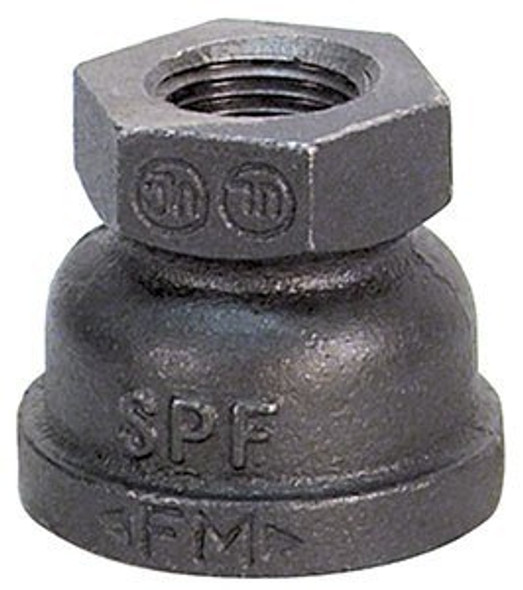
Cast Iron Reducing Coupling
ASC / SCI Fig. 3367 Cast Iron Reducing Coupling provides a threaded transition between two different pipe sizes in compatible Class 125 piping systems.
Manufactured from cast iron conforming to ASTM A126, the Fig. 3367 features female NPT threaded connections and is available with a black or hot-dip galvanized finish for industrial, commercial, water, and mechanical piping applications.
Product Highlights
- ASC / SCI Fig. 3367
- Class 125 reducing coupling
- ASTM A126 cast iron
- Female NPT connections
- Black or galvanized finish
- UL/ULC Listed and FM Approved
Technical Specifications
| Product Type | Cast Iron Reducing Coupling |
|---|---|
| Brand | ASC / SCI |
| Figure | 3367 |
| Configuration | Reducing Coupling |
| Material | Cast Iron |
| Material Standard | ASTM A126 |
| Fitting Standard | ASME B16.4 Class 125 |
| Threads | NPT per ASME B1.20.1 |
| Finish | Black or Hot-Dip Galvanized per ASTM A153 Class A |
| Agency Approvals | UL/ULC Listed and FM Approved |
Construction Details
The SCI Fig. 3367 is manufactured from cast iron conforming to ASTM A126 and designed as a Class 125 threaded reducing coupling.
Fitting dimensions conform to ASME B16.4 Class 125, while the female threaded connections use NPT threads in accordance with ASME B1.20.1.
The reducing configuration allows two different nominal pipe sizes to be joined through a compact threaded fitting. Finish options include black or hot-dip galvanized per ASTM A153 Class A.
Reducing Coupling Design & Applications
Reducing Design
- Two female threaded ends
- Different connection sizes
- Class 125 construction
- Compact inline transition
- Cast iron body
Typical Applications
- Industrial piping systems
- Commercial piping systems
- Water piping applications
- Mechanical piping systems
- Threaded pipe transitions
Installation & Selection Considerations
- Confirm Fig. 3367 is required.
- Verify both connection sizes.
- Confirm Class 125 compatibility.
- Use suitable thread sealant.
- Avoid excessive tightening.

Use the ASC / SCI Fig. 3367 product submittal to confirm cast iron construction, Class 125 requirements, NPT threads, finish options, approvals, and product specifications.
Need Help Selecting a Cast Iron Reducing Coupling?
Need help confirming connection sizes, Class 125 requirements, finish, or compatibility with your threaded piping system? The GetPipe.com Team can help.
Frequently Asked Questions
What is the SCI Fig. 3367?
The Fig. 3367 is a cast iron threaded reducing coupling designed to connect two different pipe sizes.
What material is the reducing coupling?
The Fig. 3367 is manufactured from cast iron conforming to ASTM A126.
What fitting class is the Fig. 3367?
The reducing coupling conforms to ASME B16.4 Class 125 dimensional requirements.
What type of threads does it use?
The coupling uses female NPT threaded connections conforming to ASME B1.20.1.
What is a reducing coupling used for?
It provides an inline threaded transition between two different nominal pipe sizes.
What finishes are available?
ASC specifies black or hot-dip galvanized finishes, with the galvanized finish conforming to ASTM A153 Class A.
Is the Fig. 3367 approved for listed piping applications?
ASC identifies its cast iron threaded fitting family as UL/ULC Listed and FM Approved, subject to applicable listing and approval limitations.
What should I confirm before ordering?
Confirm both connection sizes, Class 125 requirements, NPT compatibility, and the required finish.
Important Ordering & Installation Notes
- Confirm both connection sizes.
- Verify Class 125 compatibility.
- Select the required finish.
- Apply suitable thread sealant.
- Avoid excessive installation torque.