
Merit Brass
150# Stainless Steel Cross MSS SP114

- SKU:
- M410-M610
- Availability:
- Usually Ships Same Day
- Weight:
- 0.00 LBS



Description
150# Stainless Steel Cross MSS SP-114
150# Stainless Steel Cross Fittings are heavy-pattern threaded fittings designed to create four-way branch connections in stainless steel piping systems. The cross configuration allows a main piping run to intersect with two opposing branch lines, making it useful where multiple threaded flow paths must meet at a single fitting.
These fittings are available in 304 and 316 stainless steel, are identified as MSS SP-114 pattern fittings, and are listed as low lead certified to NSF/ANSI 61. The supplied product information also states conformity to AISI 304 or 316 material requirements and ISO 49-1983 (E) dimensional requirements.
Product Highlights
- 150# stainless steel cross fitting
- MSS SP-114 heavy-pattern fitting design
- Four-way threaded connection configuration
- Creates two opposing 90° branch connections
- Available in 304 and 316 stainless steel grades
- Low lead certified to NSF/ANSI 61
- Conforms to AISI 304 or 316 material requirements
- Supplied product information references ISO 49-1983 (E) dimensional requirements
- Corrosion-resistant stainless steel construction
- Designed for straightforward threaded installation
- Helps prevent contamination from rust, scale, and small particles
- Resists corrosive attack from many industrial and chemical solutions and mixtures
- Provides strength at elevated temperatures
- Long service-life potential in compatible applications
Technical Specifications
| Product Type | Cross |
|---|---|
| Pressure Class | 150# |
| Material | Stainless Steel |
| Available Grades | 304 & 316 |
| Pattern Standard | MSS SP-114 |
| Referenced Dimensional Standard | ISO 49-1983 (E) |
| Connection Configuration | Four-Way |
| Branch Orientation | Opposing 90° Branch Connections |
| Construction Style | Heavy Pattern Threaded Fitting |
| Certification | Low Lead Certified NSF/ANSI 61 |
Cross Fitting Design
A cross fitting provides four connection points arranged around a common fitting body. This allows two opposing branch lines to intersect a main piping run at 90-degree angles.
The configuration can be used to distribute, combine, or redirect flow through multiple threaded piping runs while reducing the number of separate branch fittings required.
MSS SP-114 Heavy Pattern
These fittings are identified as MSS SP-114 pattern fittings. The heavy-pattern configuration provides a robust fitting body for threaded stainless steel piping applications.
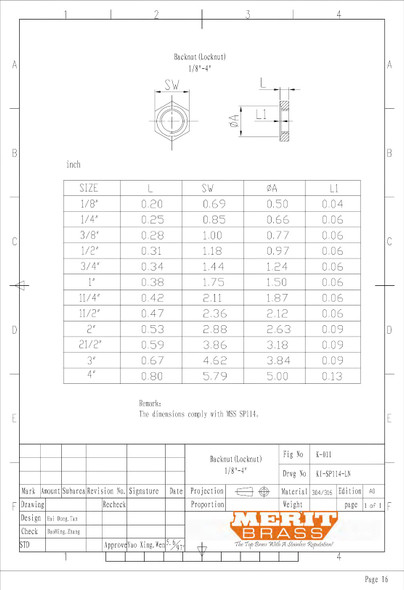
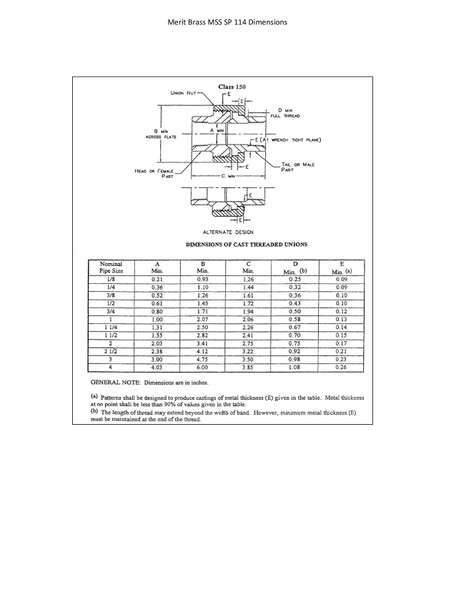
Use the manufacturer dimensional document below to confirm the exact dimensions for the selected size before ordering or installation.
Cross vs. Tee Fittings
Cross Fitting
- Four total connection points
- Creates two opposing branch connections
- Useful where multiple piping runs intersect
- Provides several flow paths within one fitting
Tee Fitting
- Three total connection points
- Creates one 90° branch connection
- Useful for a single branch from a main run
- Simpler configuration than a cross fitting
304 vs. 316 Stainless Steel
304 Stainless Steel
- General-purpose stainless steel grade
- Strong corrosion resistance for many applications
- Commonly used in water and process piping
- Suitable for many commercial and industrial environments
316 Stainless Steel
- Enhanced corrosion resistance
- Commonly selected for more aggressive environments
- Useful in many chemical and process applications
- Often selected for marine or chloride-exposed service
Stainless Steel Construction
The stainless steel construction provides corrosion resistance while helping reduce contamination associated with rust, scale, and small particles that can occur with some other metallic piping materials.
The supplied product information states that the material resists corrosive attack from hundreds of industrial and chemical solutions and mixtures and provides greater strength at elevated temperatures.
NSF/ANSI 61 Low Lead Certification
This fitting is listed as low lead certified to NSF/ANSI 61, supporting use in compatible potable-water applications where applicable system and code requirements are met.
Always confirm the requirements for the complete piping system, local codes, operating conditions, and media compatibility before installation.
Common Applications
Commercial & General Piping
- Water piping systems
- Commercial plumbing
- General process piping
- Multi-branch piping connections
- Threaded stainless steel piping assemblies
Industrial & Corrosive Service
- Industrial process piping
- Chemical handling systems
- Corrosion-resistant piping applications
- Elevated-temperature service where compatible
- Applications where rust and scale contamination are undesirable
Need Help With Fitting Selection?
Confirm the nominal pipe size, 150# pressure class, 304 or 316 stainless steel grade, four-way piping configuration, thread compatibility, operating temperature, media compatibility, and applicable system requirements before ordering.
Use the product documents below to review MSS-pattern fitting dimensions and common pipe diameter and wall thickness information.
Product Documents
Merit Brass Heavy Pattern 150# Dimensions
Use this manufacturer reference for dimensional information covering the applicable MSS-pattern stainless steel fittings.
- MSS-pattern fitting dimensional information
- Useful for confirming cross dimensions
- Supports heavy-pattern fitting selection
- Recommended for dimensional review before ordering
Pipe Chart: Common Diameters & Wall Thicknesses
Use this pipe chart to confirm common nominal pipe sizes, outside diameters, and wall thicknesses when working with compatible piping components.
- Common pipe outside diameters
- Reference wall thickness information
- Useful for confirming piping system dimensions
- Recommended before ordering or installation
Frequently Asked Questions
What is a stainless steel cross fitting used for?
A cross fitting provides four threaded connection points and is used where a main piping run intersects two opposing branch lines.
What pressure class is this cross?
This fitting is listed as a 150# stainless steel cross.
How many connections does a cross fitting have?
A cross fitting has four connection points arranged around the fitting body.
How is a cross different from a tee?
A cross provides four connections and two opposing branch paths, while a tee provides three connections and one branch path.
What stainless steel grades are available?
The fitting is available in 304 and 316 stainless steel.
What pattern standard applies?
The supplied product information identifies these as MSS SP-114 pattern fittings.
What dimensional standard is referenced?
The supplied product information also states that the fitting family conforms to ISO 49-1983 (E) in dimension. Use the manufacturer MSS dimensional document for the exact dimensions of the selected fitting.
Is this fitting low lead certified?
Yes. The supplied product information lists the fitting as low lead certified to NSF/ANSI 61.
What is the difference between 304 and 316 stainless steel?
Both provide corrosion resistance, while 316 stainless steel is commonly selected for more aggressive chemical, marine, or chloride-exposed environments.
Where can I find fitting dimensions?
Use the Merit Brass Heavy Pattern 150# Dimensions PDF in the Product Documents section above.
How can I confirm common pipe dimensions?
Use the Pipe Chart: Common Diameters & Wall Thicknesses PDF in the Product Documents section above.
Important Ordering Notes
- Product type: 150# Stainless Steel Cross.
- MSS SP-114 pattern fitting.
- Four-way connection configuration.
- Available in 304 and 316 stainless steel.
- Low lead certified to NSF/ANSI 61.
- Supplied product information references AISI 304 or 316 material requirements and ISO 49-1983 (E) dimensions.
- Stainless steel construction provides corrosion resistance.
- Confirm nominal pipe size, stainless steel grade, branch configuration, thread compatibility, and system pressure before ordering.
- Verify operating temperature, media compatibility, and applicable piping requirements before installation.
- Verify potable-water and local-code requirements when used in drinking-water systems.
- Refer to both Product Documents for fitting and pipe dimensional information.